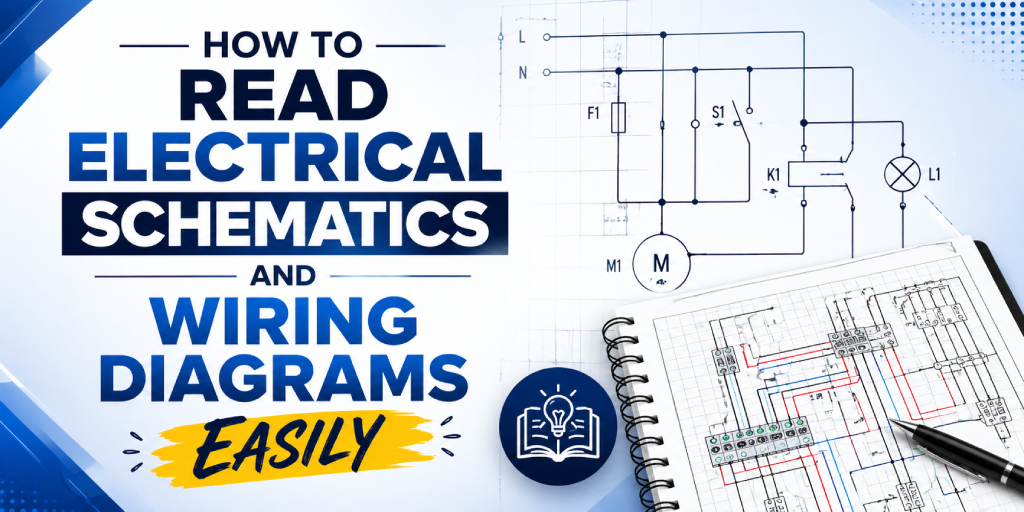
Ever looked at an electrician’s diagram and thought, “Is this a circuit, or modern art?”
You’re not alone. For many people, electrical schematics look confusing at first, with lines going in every direction, strange symbols, and labels that seem like secret codes. But once you understand the basics, these diagrams become much easier to read.
Whether you’re a student, a technician, or just someone curious about how electricity flows through your home, this guide will help you break it down step by step.
This guide is based on practical electrical knowledge and commonly used standards such as those defined by the International Electrotechnical Commission (IEC), which are widely followed in Pakistan and globally.
What Are Electrical Schematics and Wiring Diagrams?
Let’s keep it simple.
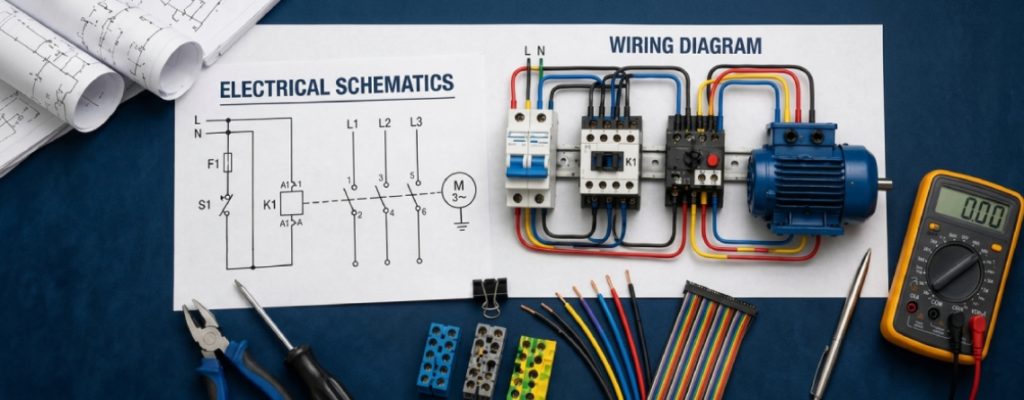
A schematic diagram shows how electrical components are connected using symbols. It doesn’t focus on the real-world placement, just the connections.
A wiring diagram, on the other hand, shows how everything is actually connected in real life, including wire paths and layout.
Think of it like this:
- Schematic = recipe
- Wiring diagram = actual cooking process
Both are useful; you just need to know how to read them.
Why Should You Learn This Skill?
In Pakistan, most residential systems operate at 220–240V. Incorrect wiring or misreading diagrams at this voltage level can lead to serious safety hazards, including electric shock and fire.
Well, learning to read diagrams can help you:
- Fix simple electrical problems at home.
- Understand house wiring electrical cables.
- Avoid dangerous mistakes (very important!).
- Save money on small repairs.
And honestly, it feels pretty cool to understand something that looks impossible at first.
Step 1: Understand Basic Electrical Symbols
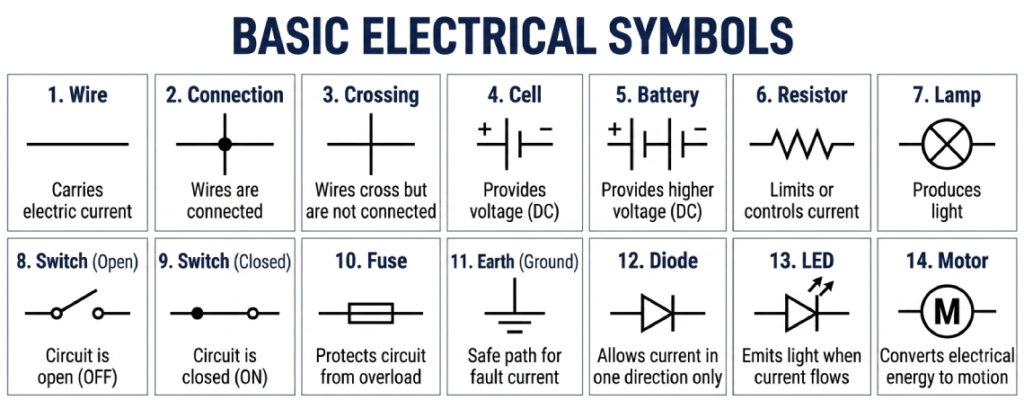
Before you try to read a full diagram, you need to understand the symbols. These are like the alphabet of electrical drawings.
Some common ones include:
- A straight line = wire
- A zigzag line = resistor
- A circle with a filament = bulb
- Parallel lines = battery
- Switch symbols = on/off control
This is where basic electrical symbols explained become important. Once you recognize these symbols, diagrams stop looking like random doodles and start making sense. These symbols are standardized under IEC guidelines, which ensures consistency across electrical diagrams worldwide.
Tip: Don’t try to memorize everything at once. Learn the most common symbols first, just like you learned the ABC before writing essays.
Step 2: Follow the Flow
Electricity flows like water in a pipe. In diagrams, you usually read from:
- Left to right
- Top to bottom
Start at the power source and follow the lines. Ask yourself:
- Where is the electricity coming from?
- Where is it going?
- What happens along the way?
If you get lost, don’t panic. Even professionals sometimes trace lines with their finger like they’re following a treasure map.
Step 3: Learn Cable Size and Current Rating
Now, this part sounds technical, but it’s simpler than it seems.
Every cable has a current rating, which indicates how much current it can safely carry.
If too much current flows through a small cable, it can overheat. And overheating wires? That’s a big “no thank you.”
A quick rule:
- Higher current = thicker cable
- Longer distance = thicker cable
Many people rely on our cable size and current rating chart PDF for guidance. Think of it as a cheat sheet for choosing the right wire.
For example, 1.5 mm² cables are typically used for lighting circuits, while 2.5 mm² cables are used for sockets. Higher loads such as air conditioners may require 4 mm² or larger cables.
Step 4: How to Read a Wiring Diagram
Wiring diagrams show how everything connects in real life.
Let’s make this super easy.
- Find the Power Source: Locate where electricity starts.
- Identify the Path: Follow the lines (wires) from start to finish.
- Look for Switches: Switches control the flow, like turning things on or off.
- Identify the Load: A device such as a bulb, fan, or appliance.
- Check Connections: Make sure everything is properly connected.
If you feel stuck, don’t panic. Even experienced people sometimes stare at diagrams like they’re solving a puzzle.
Step 5: Series vs Parallel
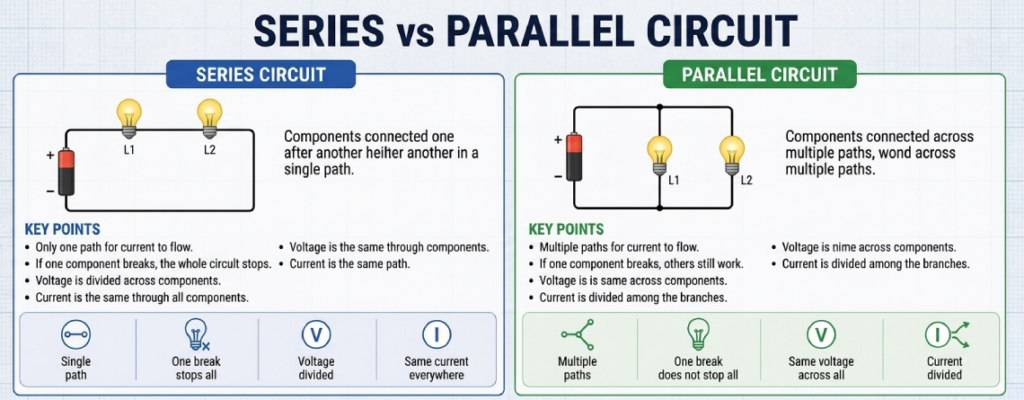
These are two ways components are connected.
- Series Connection
- One path only
- If one device fails → everything stops
Like a line of people holding hands. One lets go, everyone disconnects.
- Parallel Connection
- Multiple paths
- If one device fails → others still work
Like multiple lanes on a road. One blocked? Traffic still moves.
Most house wiring is parallel, because nobody wants their entire house to go dark when one bulb dies.
Step 6: Read Labels and Notes Carefully
Electrical diagrams often include:
- Wire labels (like L, N, E for Live, Neutral, Earth)
- Voltage ratings
- Connection points
Don’t skip these details. They’re like instructions in a recipe; ignore them, and things can go very wrong.
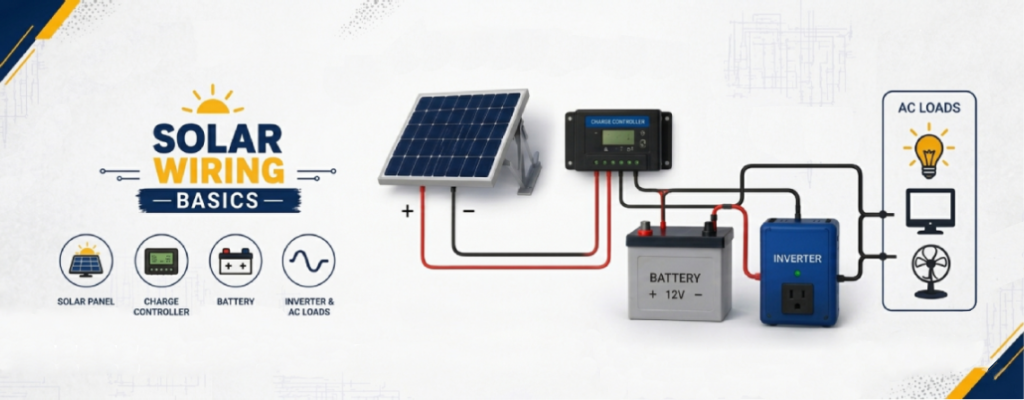
Step 7: Solar Wiring Basics
As solar energy becomes more popular, many people are now dealing with solar wiring diagrams.
These include:
- Solar panels
- Inverters
- Batteries
Solar cables are designed to withstand outdoor conditions such as heat and sunlight. Choosing the right cables from UCIL, the best solar cables manufacturer is essential for long-term performance.
And yes, solar diagrams can look complicated, but once you break them into parts, they’re just like regular circuits.
Step 8: Practice with Simple Circuits First
Start small.
Try reading diagrams for:
- A single light switch
- A basic fan connection
- A simple plug circuit
Once you’re comfortable, move on to more complex systems, such as solar setups or industrial wiring.
A Simple Trick to Remember Everything
Here’s a fun way to remember:
- Symbols = language
- Lines = roads
- Electricity = traffic
If you can follow traffic on a map, you can follow electricity in a diagram.
Easy, right?
Why Quality Cables Matter?
You can understand diagrams perfectly, but if your cables are of poor quality, everything goes downhill fast.
Good cables:
- Handle current safely
- Last longer
- Reduce fire risks
- Maintain efficiency
Bad cables:
- Overheat
- Break easily
- Cause power loss
- Become a safety hazard
This is why choosing a reliable cables supplier in Pakistan matters.
Safety Note
This guide is for educational purposes.
For installation or complex troubleshooting, always consult a qualified electrician.
Common Mistakes Beginners Make
Don’t worry, everyone makes mistakes at the start. Here are a few common ones:
❌ Ignoring symbols
Guessing instead of learning symbols leads to confusion.
❌ Using the wrong cable size
This can cause overheating and damage.
❌ Skipping the diagram
“I’ll figure it out” usually ends with “Why is nothing working?”
❌ Poor quality cables
Cheap cables can lead to serious problems. Always go with reliable suppliers like Universal Cables for peace of mind.
Why Choose Universal Cables?
When it comes to electrical wiring, you don’t want to play “guess and hope.” You want reliability, and that’s where we stand out.
As a trusted electrical wires and cables manufacturer, UCIL is known for:
- High-quality electrical wires and cables.
- Accurate cable sizing for proper current handling.
- Durable insulation that survives heat and wear.
- Consistent performance for homes, industries, and solar systems.
Whether you’re working on house wiring or installing solar panels, using our trusted products means fewer headaches and safer results.
Ready to Power Up Safely?
Reading electrical schematics isn’t about memorizing; it’s about understanding connections. Once you grasp the basics, symbols feel familiar, wiring makes sense, and cable choices become easier.
With the right knowledge and reliable solutions from Universal Cables, you’re not just reading diagrams, you’re understanding how electricity flows.
Don’t take risks with wiring. Choose Universal Cables for safe, durable, and high-performance electrical solutions.