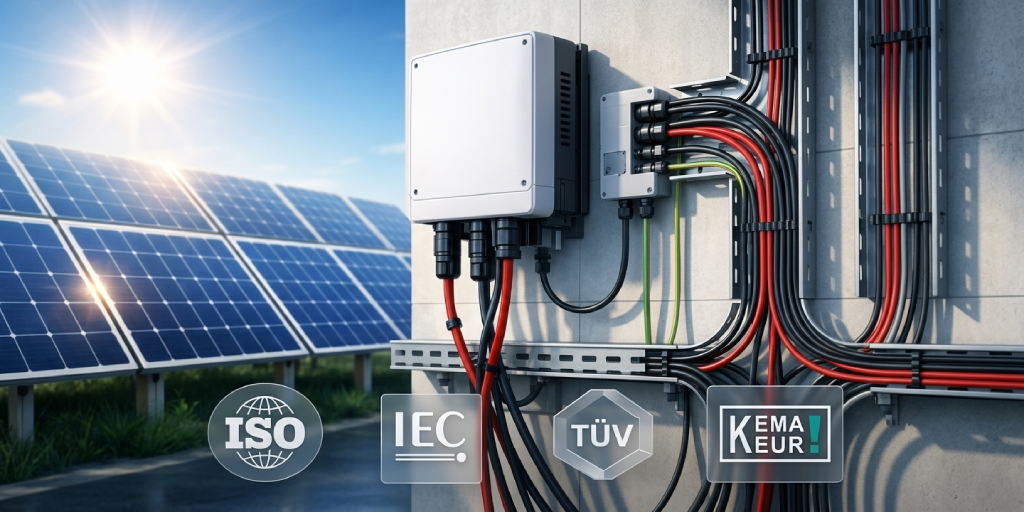
When investing in a solar energy system, most focus goes to panels and inverters, but solar DC cables are just as important. They safely carry electricity from the panels to the inverter and operate under harsh outdoor conditions with high voltage.
Because of this, quality and safety matter. Choosing cables with proper certifications ensures they meet international standards for durability, performance, and protection, helping your system run efficiently and safely over the long term.
In this blog, we’ll cover the key certifications to look for in solar DC cables and why they’re essential for your installation.
Why Certifications Matter for Solar DC Cables
Solar cables operate in some of the harshest conditions. They are exposed to:
- Direct sunlight and UV radiation
- Extreme temperatures
- Rain, moisture, and dust
- Continuous electrical load
Without proper design and testing, cables can degrade quickly, causing energy losses, electrical hazards, or system failure.
Certifications help ensure that cables:
- Meet strict international safety standards
- Can withstand long-term outdoor conditions
- Deliver reliable electrical performance
- Protect both equipment and users
In short, certified cables help your solar system operate efficiently and safely for many years.
1. IEC Standards
One of the most important Solar DC cable certifications to look for is compliance with the standards from the International Electrotechnical Commission (IEC).
IEC develops global standards for electrical technologies, including cables used in solar installations.
Some key IEC standards relevant to solar cables include:
- IEC 62930 – Photovoltaic DC cables for solar systems
- IEC 60228 – Conductors of insulated cables
- IEC 60332 – Flame retardant cables testing
If a solar cable complies with IEC standards, it means the cable has been tested for electrical safety, insulation quality, fire resistance, and performance under solar conditions.
For installers and project developers, IEC compliance is often considered a minimum requirement for professional solar installations.
2. TÜV Certification
Another important certification is provided by TÜV Austria and TÜV Rheinland, which are internationally recognized testing and certification organizations.
TÜV certification confirms that solar cables have undergone independent laboratory testing and meet strict safety and performance criteria.
TUV certified solar cables Pakistan are typically tested for:
- Long-term UV resistance
- Temperature endurance
- Mechanical durability
- Electrical insulation performance
A commonly referenced standard associated with TÜV certification is EN 50618 (H1Z2Z2-K), which specifically applies to photovoltaic cables.
For solar installers and EPC contractors, TÜV certification provides confidence that cables can withstand real-world solar installation conditions.
3. ISO Certifications
While IEC and TÜV focus on product testing, ISO certifications focus on the manufacturer’s management systems and production quality.
The International Organization for Standardization (ISO) sets globally recognized standards for quality and environmental management.
Two ISO certifications that matter in the cable industry include:
- ISO 9001 – Quality Management System
- ISO 14001 – Environmental Management System
These solar DC cable certifications ensure that the manufacturer follows structured processes, quality controls, and responsible production practices.
For customers, ISO-certified manufacturers offer greater assurance that the products are consistently manufactured to high standards.
4. KEMA Certification
Another respected certification in the electrical industry is provided by KEMA Laboratories.
KEMA is known worldwide for testing electrical equipment, especially power cables.
A KEMA certification indicates that cables have been independently tested for:
- Electrical performance
- Safety compliance
- Durability and mechanical strength
Because of the rigorous testing involved, KEMA-certified cables are often considered high-quality products suitable for demanding applications, including solar energy systems.
5. Local Regulatory Certifications
In addition to international standards, local certifications also play an important role in ensuring compliance with national regulations.
In Pakistan, some of the relevant authorities include:
- Pakistan Engineering Council (PEC)
- Pakistan Standards and Quality Control Authority (PSQCA)
These certifications ensure that products meet local safety and regulatory requirements.
For project developers, installers, and government projects, compliance with these standards helps ensure legal approval and project reliability.
Choosing Certified Solar Cables for Long-Term Performance
Solar power systems are designed to operate for 20–25 years or more. During this time, the cables must continue to perform reliably despite environmental exposure and electrical loads.
When choosing solar DC cables, checking certifications helps ensure that the cables offer:
- High resistance to UV radiation
- Excellent thermal stability
- Reliable electrical conductivity
- Strong insulation and protection
Investing in certified cables may seem like a small detail, but it plays a major role in protecting the performance and safety of your entire solar system.
Our Commitment at Universal Cables
At Universal Cables, one of the leading solar DC cable manufacturers in Pakistan, we design our XLPO Solar DC Cables to deliver reliable performance in demanding solar environments. Our cables feature tinned copper conductors and cross-linked low-smoke zero-halogen (XLPO) insulation, providing strong resistance to UV exposure, heat, and harsh outdoor weather conditions.
Manufactured in compliance with BS EN 50618 standards and certified by KEMA Laboratories and TÜV Austria, our solar cables ensure safe DC power transmission, durability, and long service life for residential, commercial, and industrial solar installations.
Explore Universal XLPO Solar DC Cables today and choose a reliable solution designed for long-term solar performance.
On the Whole
Solar energy is a smart investment, but every component in your system must work reliably to deliver the expected results. While panels and inverters often receive the most attention, solar DC cables are just as critical for safe and efficient energy transmission.
Before purchasing solar cables, always check for important certifications such as IEC, TÜV, ISO, and KEMA, along with relevant local regulatory approvals.
Certified cables provide peace of mind, protect your solar investment, and help ensure that your system continues generating clean energy for decades.
At Universal Cables, we remain committed to delivering high-quality, certified, and the best solar cables in Pakistan that support the future of renewable energy.