A solar installation can cost hundreds of thousands of rupees, but even a small cable sizing mistake can affect its performance. If the cable connecting your solar panels to the inverter is too small for the required current, it can cause voltage drop, energy loss and overheating. These issues can affect both residential and commercial solar systems in Pakistan.
Your solar system cable size depends on several factors, such as the current flowing through the system, cable length, system voltage and installation conditions. You need to consider these factors before choosing a cable for your solar installation.
Whether you have a 5 kW residential solar system or a 20 kW commercial system, your cables must meet its electrical requirements. But is a 4 mm² cable enough, or do you need a 6 mm² cable or a larger size?
Let’s look at the cable size requirements for different solar system capacities.
Why Does Solar Cable Size Matter?
Solar cables carry the DC power from the PV modules to the inverter. The cross section of the conductor in mm² dictates the resistance and therefore the current carrying capacity.
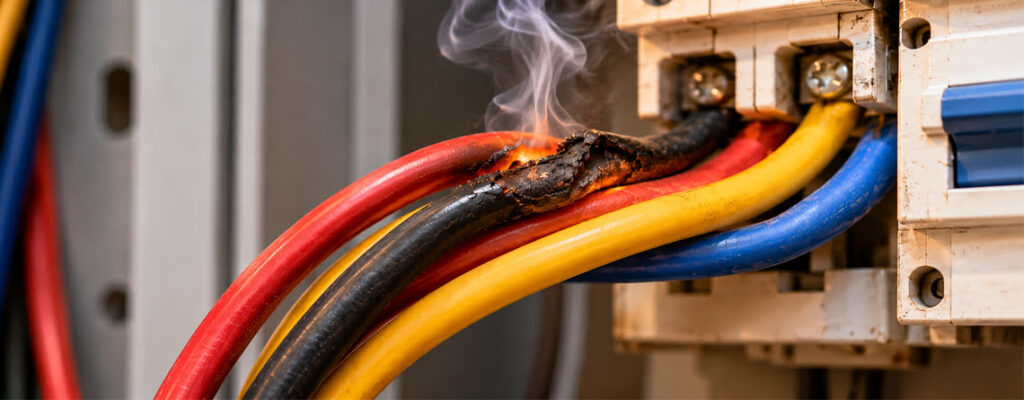
Incorrectly sized wires for solar panels can result in:
- Voltage drop: Reduced voltage along the cable run.
- Overheating: When the current exceeds the cable’s capacity, it gets too hot.
- Energy losses: Electrical energy lost as heat.
- Safety issues: A greater risk of insulation damage and electrical faults.
Correct solar cable thickness will help mitigate these risks and ensure reliable power transmission.
What Size Solar Cable Do You Need for a 5 kW Solar System?
For a 5 kW residential installation, you’d normally be looking at either 4 mm² or 6 mm² DC solar cable for the individual PV string connections.
- 4 mm²: May be suitable for shorter cable runs where the current capacity and voltage drop calculations allow.
- 6 mm²: May be preferable for longer runs or where higher current is required, as the larger conductor will generally have lower resistance.
Neither of the sizes is going to be the right one for every 5 kW installation. You’ve got to check the module configuration, string current, cable route and ambient temperature before you even consider which one you go for.
What Size Solar Cable Do You Need for a 10 kW Solar System?
A 10 kW system could very well have a higher total output; the individual DC string cables will be sized according to the current in each string rather than the total system capacity.
The AC connection has to be calculated separately. A 10 kW single phase inverter at 230 V will be around 43.5 A at unity power factor. The actual output current will depend on the inverter’s rated output.
Hence, the DC string cables and the solar inverter cable have to be selected separately.
What Size Solar Cable Do You Need for a 20 kW Solar System?
A 20 kW installation could be used for a fairly large house or a commercial building. The individual PV strings could still be on 4 mm² or 6 mm² cable, depending on their ratings, and the main DC and AC connections would probably require larger conductors.
A well-balanced 20 kW 3 phase system at 400 V will draw approximately 28.9 A per phase at unity power factor. The actual current will, of course, vary according to the operating conditions and the inverter.
Always check conductor capacity, protection and voltage drop prior to installation.
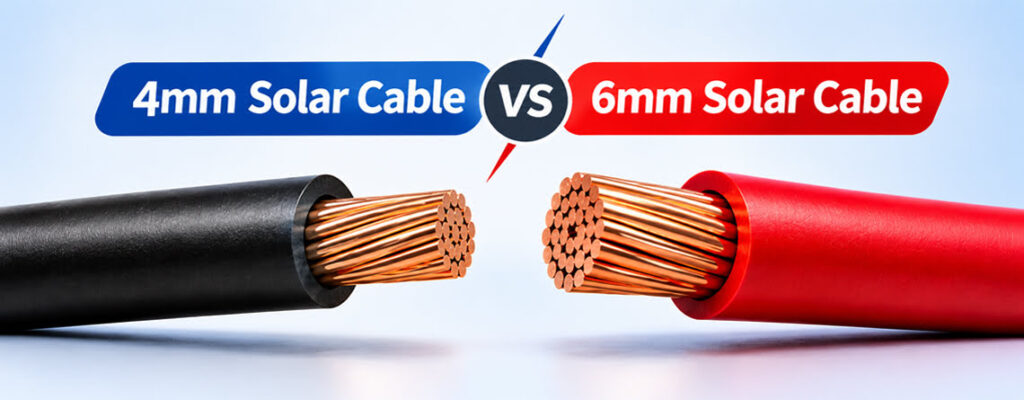
4mm vs 6mm Solar Cable: What’s the Difference?
| Feature | 4 mm² Cable | 6 mm² Cable |
| Conductor Area | Smaller | Larger |
| Resistance | Higher | Lower |
| Voltage Drop | Generally higher | Generally lower |
| Current Capacity | Installation-dependent | Generally higher |
| Typical Application | Suitable string connections | Longer runs or higher current, when calculated |
A 6 mm² copper cable will generally have lower resistance than a 4 mm² cable of the same material and length. Thicker cable isn’t the answer in all cases, though. The cable that will be selected in the end will be the one that satisfies the applicable electrical design requirements.
What Factors Affect Solar System Cable Size?
Before selecting electrical wires and cables for a PV installation, consider:
- Current and voltage: Check the maximum design current and system voltage.
- Cable length: Longer runs will generally lead to increased resistance and voltage drop.
- Installation conditions: Ambient temperature, direct sun exposure and conduit and cable bundling will all reduce current carrying capacity.
- Conductor material: Copper has lower electrical resistance than aluminium for the same cross sectional area.
- Insulation: Insulation rated for the system’s voltage, temperature and outdoor exposure.
Solar PV cable sizing has to take into account current carrying capacity, voltage drop and prospective fault current. The cable size selected must satisfy the most stringent of these design criteria, and derating factors associated with the installation must be applied.
Which Solar Cable Is Suitable For High-Temperature Conditions?
A photovoltaic cable has to be able to cope with the environmental conditions it’s going to be exposed to in the field, i.e., heat, UV and moisture.
- XLPE (cross-linked polyethylene) is an excellent electrical insulator, is by far the most widely used and is suitable for a very wide range of solar projects.
- XLPO (cross-linked polyolefin) generally has better resistance to heat, UV and chemicals and is often halogen free, so it produces less toxic smoke in a fire.
Their suitability is, of course, dependent on the cable construction, the temperature rating and the relevant product standard.
For outdoor PV connections, select a purpose-designed photovoltaic cable with verified electrical and environmental ratings. IEC 62930:2017 specifies a normal maximum continuous conductor operating temperature of 90°C for cables within its scope. It permits operation at 120°C for a limited period of up to 20,000 hours.
For more information, read our related guide Are Tinned Copper Wires Safe for Solar Panels?
What Causes Voltage Drop In Solar Cables?
Voltage drop is due to the resistance of the conductor. It increases with cable length and current, and it decreases with an increased conductor cross-sectional area.
To manage it:
- Select an appropriately sized copper conductor.
- Keep the cable runs as short as possible.
- Use the correct connectors and make sure all the connections are properly terminated.
- Account for temperature and installation related derating.
Which Solar Cable Certifications Should You Check?
Check the cable marking, technical datasheet and valid certification documents. Relevant standards include:
- IEC 62930: Photovoltaic DC cables rated up to 1.5kV DC.
- EN 50618: Requirements for H1Z2Z2-K photovoltaic cables.
IEC 62548:2016 has been replaced by IEC 62548-1:2023. The revised standard includes updated requirements for PV array wiring, cable selection, electrical protection and installation safety. Its consolidated version incorporates Amendment 1:2025. Confirm the certificate is for the exact product and manufacturer.
Read Certifications to Check Before Buying Solar DC Cables for a detailed checklist.
Why Choose Universal Cables for Solar Installations?
Universal Cables offers the Greener Universal XLPO solar cables for residential, commercial and industrial PV applications in Pakistan.
According to the company’s product information, key features include:
- Available sizes: 4 mm² and 6 mm².
- Insulation: XLPO.
- Certification: IEC, BS, KEMA, and TÜV Austria certified.
- Manufacturing experience: Over four decades, since 1978.
For product selection, get the relevant datasheet and certification details to check voltage ratings, temperature ratings and current carrying capacity.
If you need the best cables in Pakistan for a solar installation or other electrical applications, explore Universal Cables’ product range and contact the team for technical information.
Frequently Asked Questions
Can I use a 4 mm² solar cable for a 5 kW system?
Yes, if its current rating, voltage drop and installation conditions are all in accordance with the system design requirements.
Is a 6 mm² solar cable better than a 4 mm² cable?
It’ll generally have lower resistance and lower voltage drop, though the right choice, of course, will depend on the calculated electrical requirements.
What size DC cable is required for a solar inverter?
It’s all to do with DC current, cable length, voltage, installation conditions and inverter specifications. You should, of course, follow the manufacturers’ recommendations and the relevant standards.
Are XLPE and XLPO cables suitable for solar installations?
Both are used as insulating materials. Use cables specifically designed and tested for use in photovoltaic applications.
How can I reduce voltage drop in solar cables?
Use an appropriately sized conductor, keep the cable length as short as possible and make sure the connections are properly installed.
Technical Sources: