By Universal Cables Editorial Team | Reviewed by Electrical Cable & Power Distribution Specialists | June 2026
Picture Anas, a homeowner who had just completed the installation of a solar system on his roof. Looking up at the panels with satisfaction, he thought, “This is going to make a big difference in my electricity bills.”
A week later, he called his installer with a serious question:
“Why are there so many cables? Aren’t the panels supposed to do everything?”
The installer laughed and replied, “The panels are the stars of the show, but the cables are the roads that carry the energy. No matter how fast the car is, poor roads will slow it down.”
And that’s exactly how solar systems work. While solar panels often steal the spotlight, the cables connecting the entire system play an equally important role in efficiency, safety, and long-term performance.
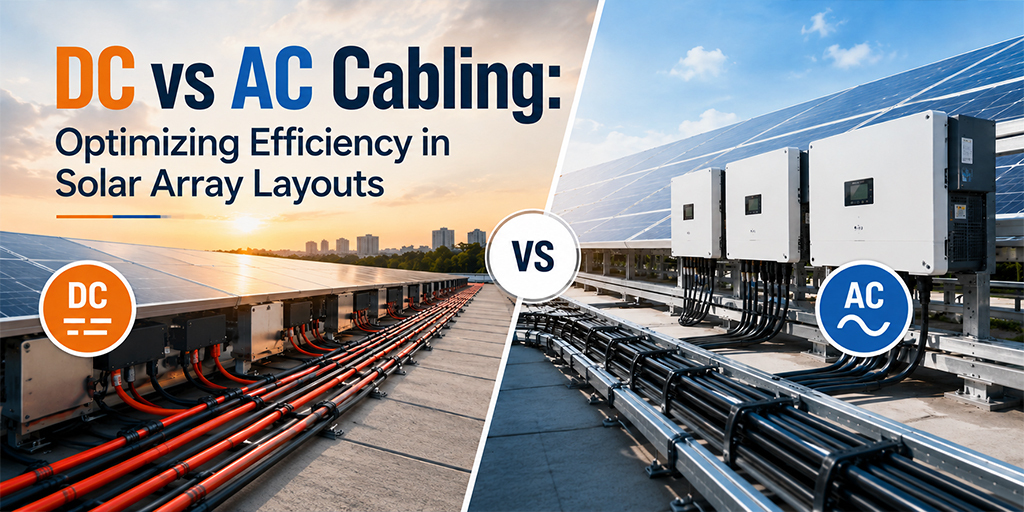
When designing a solar array, one of the most important decisions is choosing and arranging DC and AC cabling correctly. Understanding the differences between the two can help maximize energy production, reduce power losses, and extend the lifespan of your entire solar system.
Understanding DC and AC in Solar Systems
Before we compare the cables, let’s quickly understand the two types of electricity involved in solar power.
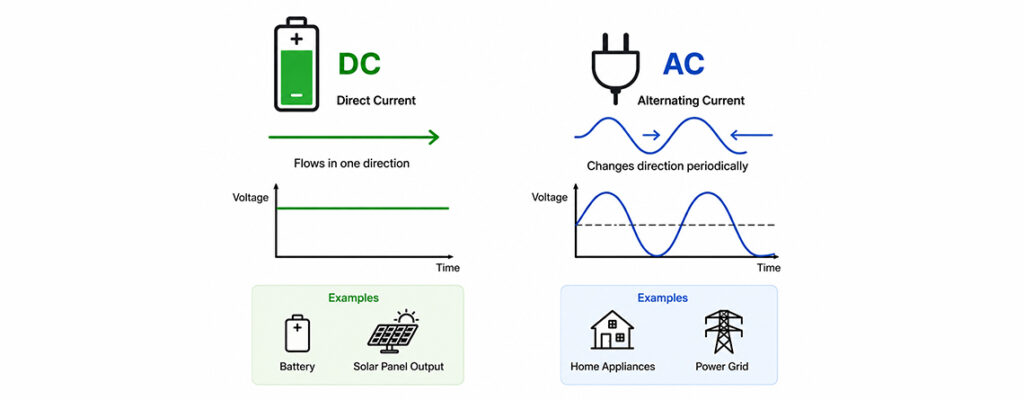
1. DC (Direct Current):
Solar panels naturally generate Direct Current (DC), which flows in a single direction from the solar panels to the inverter. This is the first stage of electricity transmission within a solar power system.
2. AC (Alternating Current):
Most homes, businesses, and industrial facilities operate on Alternating Current (AC). To make solar energy usable, the inverter converts the DC electricity produced by the panels into AC electricity, which can then power appliances, machinery, and other electrical equipment.
As a result, every solar power system relies on both DC and AC cabling, with each type playing a distinct and essential role in the flow of electricity.
International Standards for Solar Cables
High-quality solar cables should comply with recognized international standards, including:
- IEC 62930 (Electric cables for photovoltaic systems)
- EN 50618 (Solar photovoltaic cable requirements)
- IEC 60228 (Conductors of insulated cables)
- IEC 60502 (Medium-voltage power cables)
- TÜV 2 PfG 1169/08.2007 certification requirements
Compliance with these standards helps ensure safety, durability, and long-term electrical performance in solar installations.
Why Are Cables Important in Solar Systems?
Many people focus primarily on choosing high-quality solar panels and inverters. While these components are essential to a solar system’s performance, the quality of the cables is equally important.
Cables are responsible for carrying electricity throughout the system, and using poor-quality or improperly sized cables can negatively impact efficiency, safety, and reliability.
Common issues caused by low-quality cables include:
- Power losses
- Voltage drops
- Reduced efficiency
- Overheating
- Increased maintenance costs
- Safety risks
Imagine trying to fill a swimming pool with a pipe that has several leaks. No matter how much water flows through it, a portion is lost before it ever reaches the pool. The same principle applies to a solar power system: if the cables are of poor quality, some of the energy generated by the panels can be lost before it reaches its destination.
Energy losses within cables directly affect how much electricity reaches your home or business.
Insights From Real Solar Installations
At Universal Cables, our technical team has worked closely with solar installers and electrical contractors across residential, commercial, and industrial projects. One common observation is that inefficient cable routing often causes avoidable voltage drops, especially in installations where inverters are positioned far from solar arrays.
In several projects, relocating the inverter closer to the solar panels and selecting appropriately sized conductors helped reduce transmission losses and improve overall system efficiency.
This practical experience reinforces a simple principle: solar system performance depends not only on panels and inverters but also on proper cable selection and layout design.
DC Cabling: The First Energy Highway
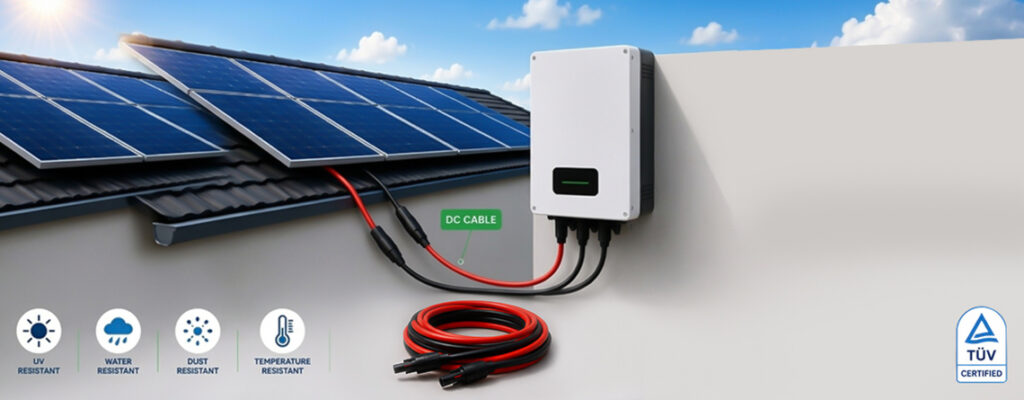
DC cables carry electricity directly from the solar panels to the inverter. Because they are constantly exposed to sunlight, rain, dust, and temperature fluctuations, they must be highly durable.
Our high-quality TUV certified solar DC cables are specifically designed for these conditions, offering excellent resistance to UV radiation, moisture, and harsh weather.
Benefits of quality DC cables include:
- Lower power losses
- Better weather resistance
- Improved safety
- Longer service life
- Consistent performance
Businesses and installers looking for a reliable solar DC cables manufacturer Pakistan should prioritize products that meet international quality and safety standards.
AC Cabling: Delivering Power Where It’s Needed
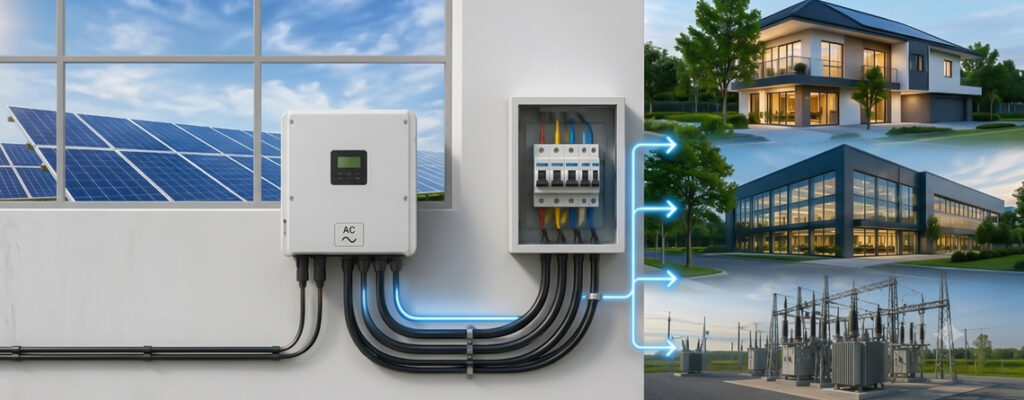
Once the inverter converts DC electricity into AC, the power is carried through AC cables to distribution panels, homes, commercial facilities, or the utility grid.
Since these cables are responsible for delivering usable electricity, their quality has a direct impact on system efficiency. Our high-quality AC cables help minimize power losses, ensure stable energy transmission, and contribute to the overall performance and reliability of the solar system.
Modern XLPE insulated AC cables are widely preferred because they offer:
- Higher temperature resistance
- Better insulation properties
- Enhanced durability
- Improved electrical performance
- Greater resistance to moisture and chemicals
These advantages make them ideal for both residential and industrial solar installations.
DC vs AC Cabling: Which Is More Efficient?
This is a common question among solar system owners, but efficiency depends on optimizing both DC and AC cabling.
| Factor | DC Cabling | AC Cabling |
| Purpose | Panels to inverter | Inverter to loads/grid |
| Distance | Shorter runs preferred | Better for longer runs |
| Efficiency Risk | Voltage drop | Power loss |
| Cable Size | Reduces resistance | Improves transmission |
| Cable Quality | Solar-rated cables | Quality insulated cables |
| Installation | Fewer bends and joints | Efficient routing |
| Optimization | Minimize cable length | Proper cable management |
| Best Practice | Place inverter closer to panels | Use correctly sized conductors |
Bottom Line: Efficient solar systems require both well-designed DC and AC cabling. Using quality cables and optimizing cable routes helps reduce losses and improve performance.
How Voltage Drop Affects Solar Efficiency
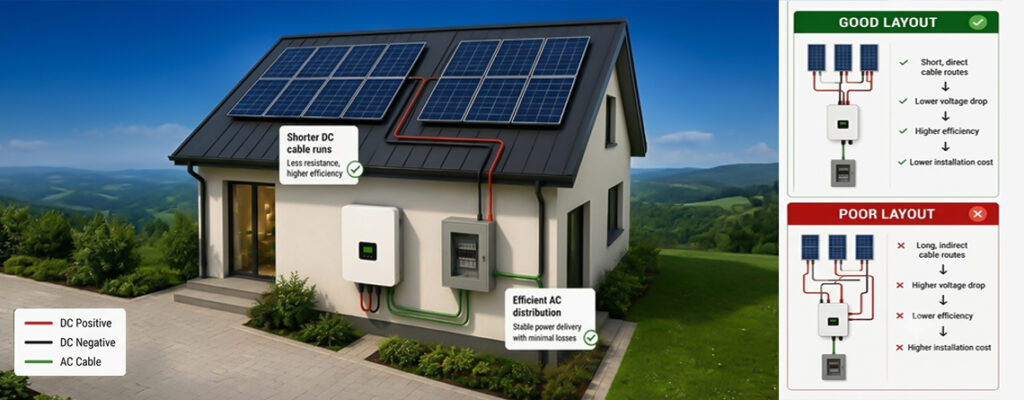
One of the most important factors in solar cable design is voltage drop. As electricity travels through a cable, a small amount of energy is lost due to the cable’s electrical resistance. Longer cable runs or undersized conductors can increase these losses and reduce overall system efficiency.
For example, a 100 kW solar system operating at 800V DC may experience approximately 2% energy loss if cable lengths are excessive or conductor sizing is inadequate. While 2% may appear minor, over the lifetime of a solar installation it can translate into thousands of kilowatt-hours of lost energy production.
This is why professional solar system designers carefully calculate cable sizes and optimize routing to minimize voltage drop and maximize energy delivery.
Which Cabling Layout Works Best?
There is no single cabling layout that works for every solar installation.
The best layout depends on:
- Roof size
- Panel arrangement
- Inverter location
- System capacity
- Distance between components
However, one general rule applies to almost every solar project: keep cable routes as short and direct as possible.
Installers often position inverters strategically to reduce unnecessary DC cable lengths while maintaining efficient AC distribution.
A well-planned layout reduces voltage drop, improves efficiency, and lowers installation costs.
What Happens in Large Solar Projects?
In residential systems, cable lengths are relatively short. However, in commercial and utility-scale solar farms, cabling becomes much more complex.
Large solar projects may contain:
- Thousands of solar panels
- Multiple inverters
- Transformers
- Switchgear systems
- Grid connections
In such installations, efficient cable planning becomes critical.
A small percentage of energy loss across a large solar farm can translate into significant financial losses over time.
For large-scale solar projects, medium voltage cables in Pakistan are commonly used to transmit electricity efficiently from solar facilities to substations and utility networks.
Medium-voltage cables offer:
- Efficient power transmission
- Reduced energy losses
- Strong mechanical performance
- High reliability
- Long operational life
For large-scale projects, cable quality can directly influence profitability and system performance.
Tips for Optimizing Solar Array Cabling
To achieve maximum efficiency, follow these practical guidelines:
- Choose certified products: Always opt for solar cables that meet recognized international quality and safety standards.
- Select the right cable size: Undersized cables increase resistance and energy losses.
- Minimize cable length: Shorter cable routes generally improve efficiency.
- Protect against environmental conditions: Use cables designed for outdoor and solar applications.
- Work with trusted manufacturers: Reliable manufacturers provide consistent quality and long-term performance.
- Schedule regular inspections: Periodic maintenance helps identify wear, damage, or loose connections before they affect performance.
Why Choose Universal Cables for Your Solar Projects?
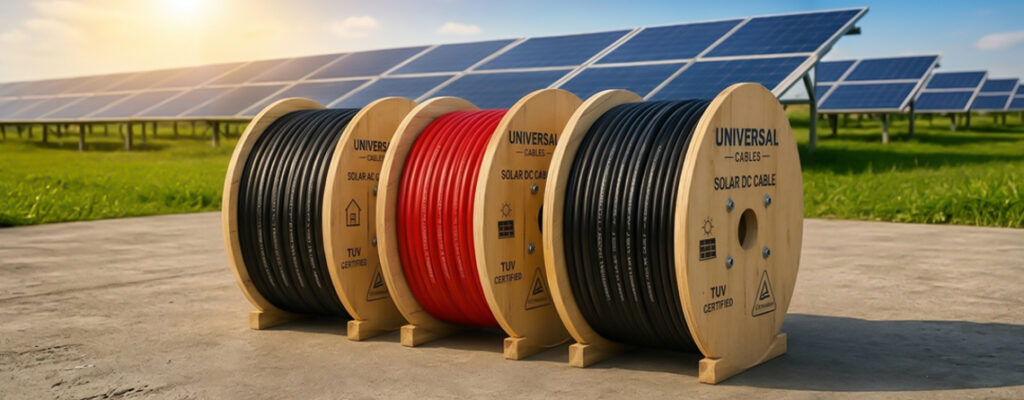
The performance of any solar system depends heavily on the quality of its cabling. Universal Cables offers reliable solutions, including TUV certified solar DC cables, XLPE insulated AC cables, and medium voltage cables in Pakistan, designed for efficient and safe power transmission.
Customers trust Universal Cables for:
- Consistent quality
- International-standard compliance
- Durable, weather-resistant products
- High-performance insulation
- Reliable support for solar projects
Whether it’s a rooftop installation or a large solar farm, Universal Cables delivers dependable solutions that help maximize efficiency and long-term performance.
What Is the Final Verdict?
Solar efficiency depends on more than just panels and inverters, quality cabling is equally important for minimizing energy losses and maximizing system performance. DC cables carry electricity from the solar panels to the inverter, while AC cables distribute the converted power to homes, businesses, or the utility grid.
Whether you’re searching for TUV certified solar DC cables, XLPE insulated AC cables, medium voltage cables in Pakistan, or a reliable solar DC cables manufacturer Pakistan, investing in high-quality cables can improve efficiency, enhance safety, and ensure long-term performance for your solar system.
Ready to power your solar projects with reliable cable solutions? Contact Universal Cables today and discover why we’re trusted for some of the best electric cables in Pakistan.
Important Note
Cable selection should always be based on system voltage, current carrying requirements, environmental conditions, installation method, and applicable electrical standards. Qualified electrical engineers or certified solar installers should be consulted for system-specific cable sizing and design.
Frequently Asked Questions
1. Is DC cabling more efficient than AC cabling?
Neither is inherently more efficient. Solar system performance depends on cable sizing, route design, voltage levels, and overall system architecture.
2. How can I reduce voltage drop in a solar system?
- Use larger conductor sizes
- Keep cable runs short
- Minimize unnecessary joints
- Use certified solar-rated cables
3. Why are TÜV-certified solar cables important?
TÜV certification verifies that solar cables meet internationally recognized requirements for safety, durability, UV resistance, and long-term outdoor performance.
4. Can poor-quality cables affect solar panel output?
Yes. Excessive resistance and voltage drop can reduce the amount of generated energy reaching the inverter or electrical load.