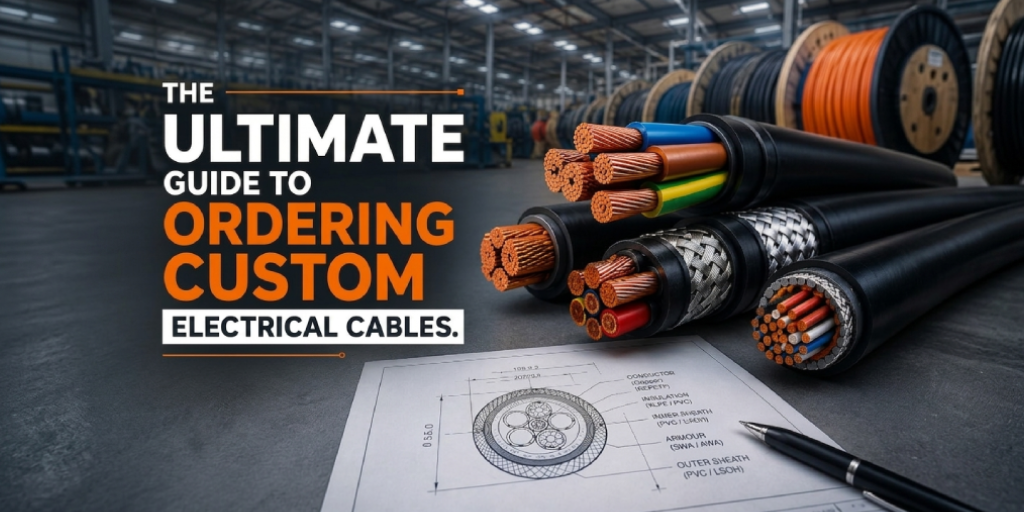
Ever tried ordering a custom cake and ended up with something that looked nothing like what you had imagined?
Now picture that happening with your electrical cables. Except instead of a bad cake, you get the wrong wire gauge, the wrong insulation, and a very unhappy electrician staring at you on-site. Not fun.
Custom electric cables sound complicated, but they really don’t have to be. Whether you’re setting up a factory, managing a large construction project, or running a telecom network, getting the right cable made to your exact specifications is one of the smartest decisions you can make.
This custom electrical cable guide walks you through everything. Let’s go!

Wait, Why Would Anyone Need a Custom Cable?
Great question! Most people assume standard off-the-shelf cables work for everything. Sometimes they do. But a lot of the time, especially in industrial, telecom, and large-scale construction projects, standard cables simply don’t cut it.
Here’s why you genuinely need custom wiring solutions:
- Unique industrial environments: Extreme heat, chemicals, heavy machinery, or outdoor exposure.
- Telecom and data applications: Where signal integrity and specific shielding matter enormously.
- Large construction projects: Requiring non-standard lengths, gauges, or multi-core configurations.
- Specialized machinery: Equipment that needs flexible cable manufacturing with very specific bend radius or flexibility ratings.
- Export or compliance requirements: Projects that must meet ASTM cable standards or IEC certified custom cables specifications.
Bottom line? If your project has specific performance, environmental, or compliance requirements, customization is not a luxury. It’s a necessity.
In large industrial projects across Pakistan, engineers often specify custom cable configurations because environmental conditions, routing distances, equipment requirements, and operational demands can vary from one installation to another.
Okay, But Where Do You Even Start?
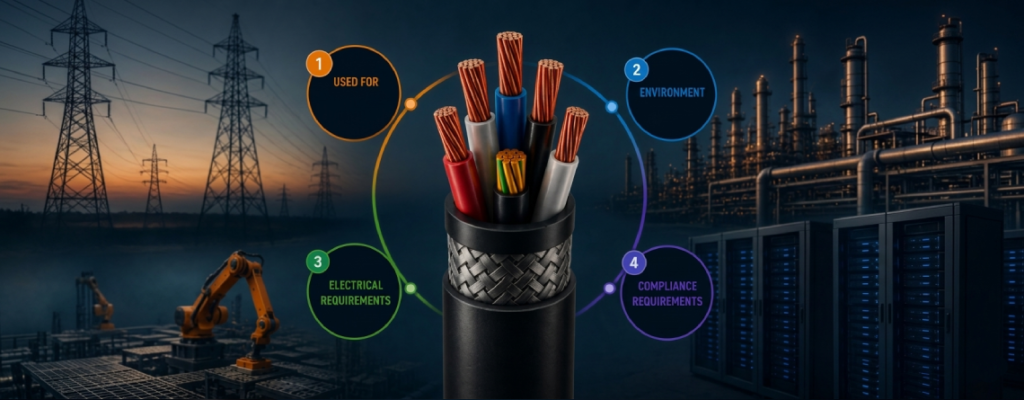
This is where most people freeze. The good news? It’s simpler than it looks. Before you pick up the phone or fill out an inquiry form with any electrical cables manufacturer in Pakistan, get clear on these basics:
1. What is the cable actually for?
- Power transmission?
- Data? Control systems?
- Telecommunication cable customization?
Each application has completely different requirements. Knowing the end use immediately narrows everything down.
2. What environment will it operate in?
- Indoors or outdoors?
- Underground or overhead?
- Exposed to water, chemicals, or extreme temperatures?
- Moving parts or fixed installation?
3. What are your electrical requirements?
- Voltage rating
- Current carrying capacity
- Number of cores needed; this is where multi-core custom wiring comes in
- Conductor material, copper or aluminium?
4. Do you have compliance requirements?
Many industrial and government projects in Pakistan require cables that meet specific standards. Know upfront whether you need ASTM cable standards, IEC certified custom cables, or local PSQCA compliance. This saves enormous headaches later.
Write these answers down before you contact anyone. You’ll sound like a pro, save time, and get accurate quotes faster.
What Exactly Goes Into a Custom Cable?
Think of a custom electrical cable like a sandwich. Every layer has a job, and changing any one layer changes the whole thing.
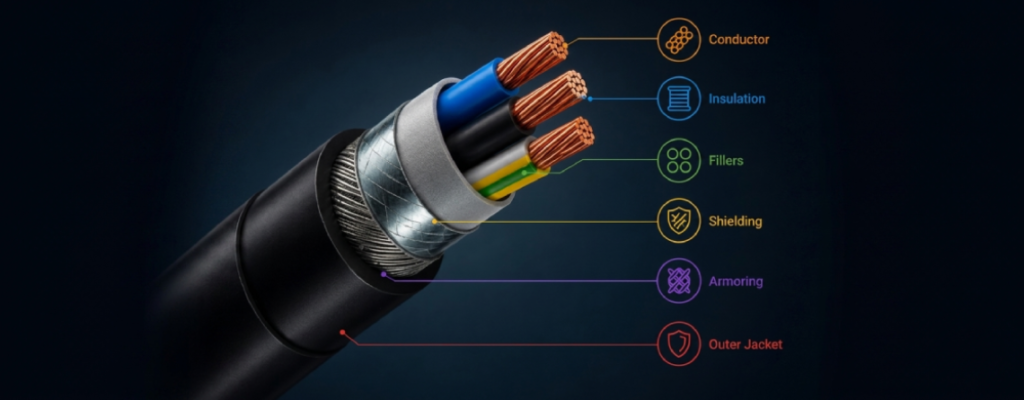
Here’s what goes into a typical custom cable build:
- Conductor: The core that actually carries electricity. Copper for high performance and residential use; aluminium for industrial power cables and transmission.
- Insulation: Wraps around each conductor to prevent short circuits. Material choices include PVC, XLPE, rubber, or silicone, depending on heat and flexibility needs.
- Fillers: Maintain the cable’s shape and protect internal conductors, especially important in multi-core custom wiring.
- Shielding: A metallic layer that blocks electromagnetic interference, critical for telecommunication cable customization and data cables.
- Armoring: Steel wire or tape armor for mechanical protection in underground or high-risk environments.
- Outer Jacket: The final protective layer. PVC, LSZH (Low Smoke Zero Halogen), or polyurethane, depending on the environment.
Each layer is chosen based on your specific application. This is exactly why flexible cable manufacturing often requires engineering guidance because material selection directly affects performance, durability, and compliance outcomes.
| Material | Typical Use | Technical Property |
| Copper | Building wiring | Conductivity ~58 MS/m |
| Aluminium | Power transmission | Around 30–35% copper weight |
| XLPE | Industrial cables | Operating temperature up to 90°C |
| LSZH | Public buildings | Low smoke and reduced toxic emissions |
What Is Multi-Core Custom Wiring and Why Does It Sound So Complicated?
The name sounds like something engineers discuss while staring seriously at blueprints. But it’s actually simple.
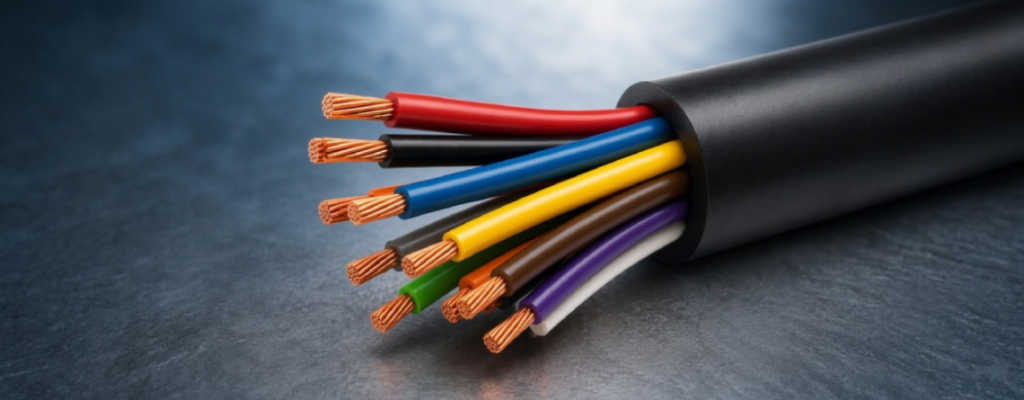
A cable contains conductors inside it. A single-core cable contains one conductor. Multi-core custom wiring contains multiple conductors bundled together. These are commonly used where several power connections need to run through a single cable system.
Benefits include:
- Easier installation
- Better organization
- Reduced cable clutter
- Improved efficiency
Less cable chaos. Less electrician stress. Everyone wins.

How Do Cable Standards Actually Work, And Why Should You Care?
We know. Standards sound boring. But hear us out, because this part could save you and protect your property from serious trouble.
Cable standards exist to ensure that what you order actually does what it’s supposed to do; safely, consistently, and verifiably.
Let’s look at some of the standards you’ll frequently encounter:
- IEC (International Electrotechnical Commission): The global benchmark for electrical cable performance. IEC certified custom cables are accepted in most international markets and large infrastructure projects.
- ASTM (American Society for Testing and Materials): Widely used for industrial cable sourcing, especially for projects with American specifications or export requirements.
- PSQCA (Pakistan Standards and Quality Control Authority): The local standard for cables sold and used within Pakistan. Often mandatory across government and commercial projects.
- TÜV Certification: TÜV certified cables have passed rigorous independent safety and performance testing, making them highly trusted for high-stakes industrial and export projects.
- ISO (International Organization for Standardization): An ISO certified manufacturer like Universal Cables follows internationally recognized quality management systems, ensuring consistency, traceability, and zero shortcuts at every production stage.
- KEMA Certification: It is particularly significant for high-voltage cables and industrial power cables, confirming that the product has been independently tested under real-world stress conditions, not just on paper.
A reputable electrical cables manufacturer in Pakistan will guide you on which standard applies and certify the finished product accordingly.
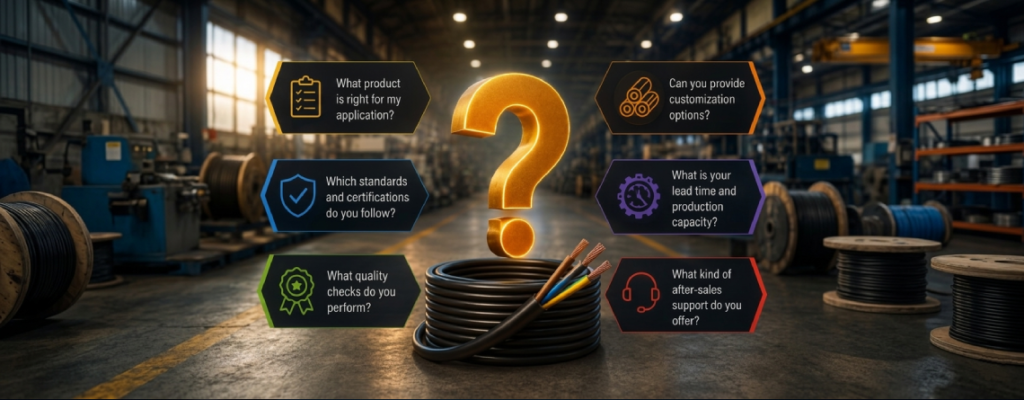
What Questions Should You Ask Your Cable Manufacturer?
Don’t just send a vague inquiry and hope for the best. When approaching any supplier for industrial cable sourcing or custom wiring solutions, ask them directly:
- Are you PSQCA certified, and can you meet ASTM or TÜV standards for this order?
- What is your minimum order quantity for custom cables?
- Can you provide test reports and quality certifications with the order?
- What is your lead time for custom manufacturing?
- Do you offer flexible cable manufacturing for moving or dynamic applications?
- Can you handle multi-core custom wiring with specific color coding?
- What is your process if the delivered cable doesn’t meet specifications?
A manufacturer who answers these confidently, with supporting documentation, is one worth trusting.
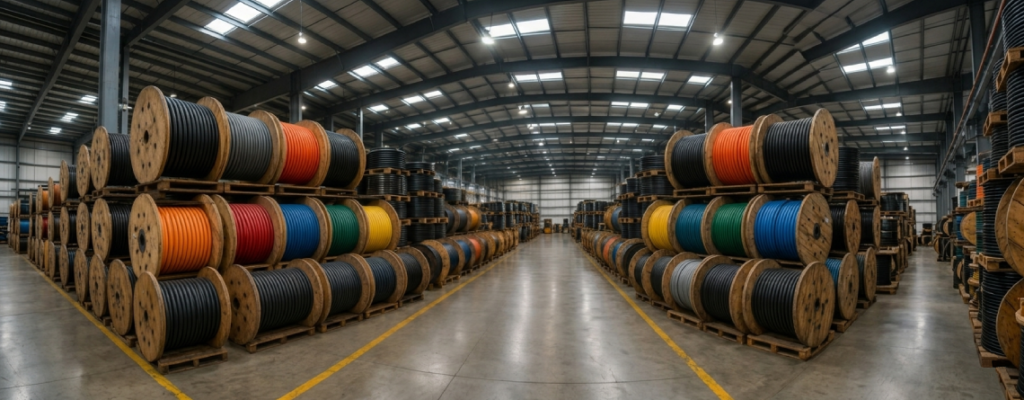
So, Why Do Pakistan’s Biggest Projects Trust Universal Cables?
Universal Cables has supplied projects across residential, industrial, and infrastructure sectors throughout Pakistan.
Here is what sets Universal Cables apart:
- Decades of experience: Proven results across residential and industrial projects nationwide.
- Full certification compliance: IEC, PSQCA, ISO, TÜV, and KEMA. Whatever your project demands, it’s covered.
- Complete custom capability: Multi-core wiring, flexible cables, specialized insulations; all under one roof.
- Rigorous quality testing: Every order is tested and documented before dispatch. Cables and certifications, not just a box and handshake.
- Large-order reliability: The production capacity to handle big, time-sensitive orders without cutting corners.
- Technical support from day one: Universal Cables’ team helps you define the right specifications BEFORE the order is placed.
When the project matters and failure isn’t an option, Pakistan’s top developers, industrialists, and contractors trust Universal Cables. And they keep coming back.
Because a cable is only as good as the manufacturer behind it.
Ready to Order the Right Cable?
Vague specs lead to wrong cables. Wrong cables lead to failed projects. Failed projects lead to very awkward conversations with very unhappy clients. The key is knowing what you need, asking the right questions, and working with a manufacturer who actually knows what they’re doing.
Whether you need multi-core custom wiring for a factory, IEC certified custom cables for an infrastructure project, or telecommunication cable customization for a data network, Universal Cables manufacturing has the expertise, certifications, and production capacity to get it right.
Don’t guess. Don’t compromise. Order smart.
Explore our custom cable options today and find the right fit for your next project.