Have you noticed your lights flickering at home? In some cases, a loose bulb is all that causes the light to flicker. However, frequent flickering can indicate voltage fluctuations, electrical wiring faults, or an unstable power supply. Knowing the cause can help you protect your home and your electrical goods.
In this guide, we’ll learn the common causes, practical safety tips, and when to call a qualified electrician to keep your home’s electrical system safe and reliable.
What Are the Most Common Reasons for Flickering Lights?
Lights can go flickering for a number of reasons. Some of the causes are easily rectified; others aren’t and will require the assistance of a qualified electrician.
Flickering or dimming lights can signal an electrical issue, particularly when the problem continues or occurs in several lights throughout your home. It’s not always the case that a flickering light is down to a loose bulb, so if it’s a continuing issue, it may well be necessary to have a qualified electrician look at the system.
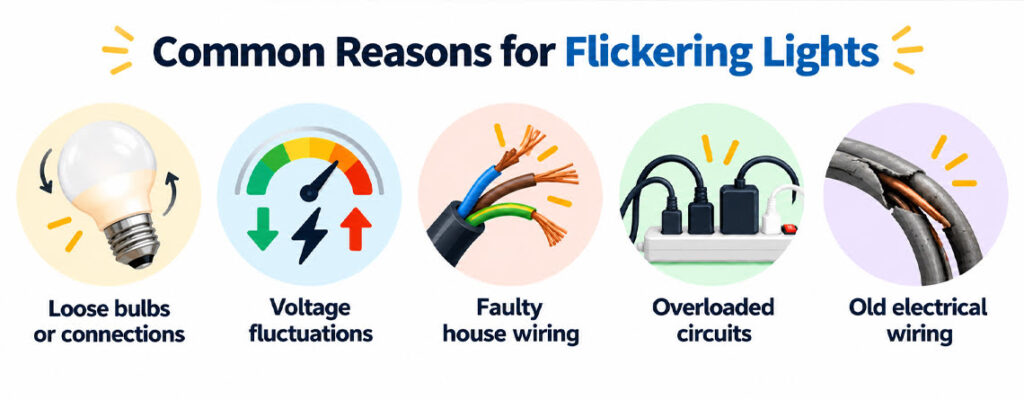
Common causes include:
- Loose bulbs or connections: A bulb that is not securely fitted into its socket may cause the light to flicker.
- Voltage fluctuations: Changes in the power supply can cause lights to dim or brighten.
- Faulty house wiring: Damaged or loose copper wires.
- Overloaded circuits: Running a number of high-power appliances on one circuit will affect the performance of that circuit.
- Old electrical wiring: Worn-out cables and outdated connections may cause repeated electrical problems.
Identifying the root cause early can help to prevent bigger problems and improve electrical safety.
How Can You Fix Flickering Lights Safely?
The correct solution will depend on the root cause. You can try a few of the basic checks; just be very careful when doing any electrical work.
Here are some practical steps:
- Check the bulb. Switch the light off and allow it to cool, then check that the bulb is firmly in place.
- Check the other lights. Notice if the flickering occurs in just one light or is affecting several lights at the same time. This helps determine whether the fault is confined to one fixture or is related to the wider electrical system.
- Reduce the amount of heavy load. Avoid operating too many high-watt appliances on the same circuit, as excessive electrical demand can contribute to flickering lights.
- Call an electrician. If the lights continue to flicker, seek assistance from a qualified electrician to check the wiring, electrical connections, and voltage supply for potential faults.
Overloading a circuit can increase the risk of it overheating and causing an electrical fire. Don’t run too many high watt appliances off the same circuit, and if you’re experiencing repeated trips of the breaker, then get a qualified electrician to look at it rather than simply resetting the breaker each time.
Never touch any exposed wires and never attempt to repair a live electrical connection. If you see sparks, there’s a burning smell, there’s buzzing, or the switches are hot, then switch off the circuit in question safely and get a qualified person to look at it.
What Are The Signs Of Faulty House Wiring?
Faulty wiring does not always result in flickering lights, as some electrical faults may occur without obvious warning signs.
Other warning signs may include:
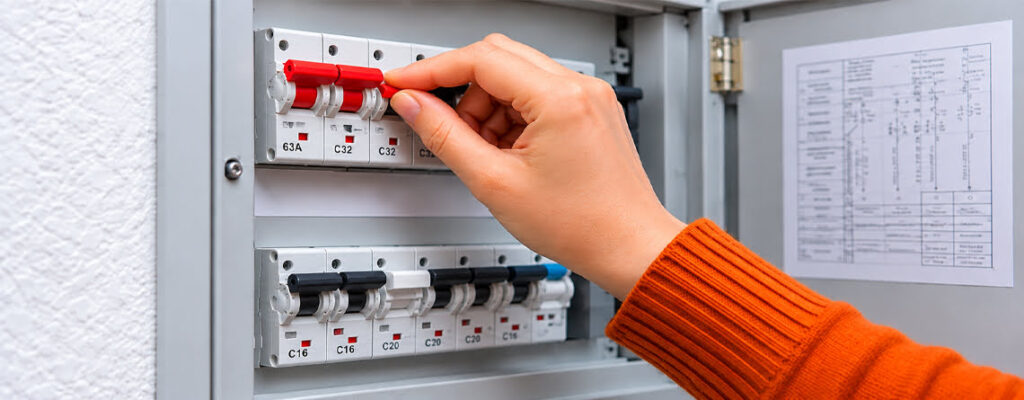
- Circuit breakers tripping repeatedly
- Burning smells near switches or sockets
- Warm or discolored electrical outlets
- Buzzing sounds from switches
- Lights becoming abnormally bright or dim when an appliance starts.
Burning smells, buzzing sounds, discolored outlets and switches/sockets that are abnormally hot can all be signs of a potentially dangerous electrical situation. If you observe any of these, then don’t use the affected equipment and get it looked at by a qualified professional. Don’t remove the covers from the outlets and don’t go near any exposed wiring.
These signs should not be ignored. Damaged house wiring cables can increase the risk of electric shock and electrical fires. If your home has old wiring, read our blog, Signs It’s Time to Replace Old Electrical Wiring, to learn when an inspection may be necessary.
How Can Faulty Wiring Affect Electrical Appliances?
Electrical appliances require a stable and reliable supply of power to operate safely and efficiently. Voltage fluctuations and loose connections can all have an effect on their performance.
For instance, repeated voltage fluctuations can cause a computer to reboot, lights to dim, and sensitive electronics to go haywire. Severe or sustained electrical problems can also damage the components of appliances.
Selecting the right electrical wires and cables is essential for maintaining a safe and dependable electrical system. Good-quality copper wires, correctly sized cables, and professional installation help ensure reliable power distribution. Also select low voltage cables based on their intended application and the manufacturer’s specifications.
Choosing the best cables for house wiring involves more than just assessing quality; it also requires considering safety, durability, and suitability for the intended electrical load. Cable size, insulation, current capacity, and compliance with applicable electrical standards also matter.
What Steps Can Help Prevent Lights from Flickering?
A few simple habits can help keep your electrical system in good condition:
- Schedule regular electrical inspections.
- Have a qualified person replace any damaged switches, sockets and wiring.
- Avoid overloading electrical circuits.
- Use appropriate cables and correctly rated protective devices.
- If voltage problems are affecting the whole property or the whole neighborhood, then you should contact your electricity supplier.
For additional protection against electrical faults, read our guide, Understanding GFCI vs. AFCI: Critical Home Safety Upgrades, to learn how these devices help protect your home.
How Can Universal Cables Help You Choose the Right Wiring?
At Universal Cables, we know how important reliable electrical wiring is for homes and buildings. The right electrical wires and cables will support safe distribution of power and will help to minimize wiring-related problems if correctly installed and maintained.
Whether you are building a new home or upgrading an existing electrical system, consider cable quality, the intended application, and a qualified electrician’s recommendations. If you are looking for the best cables in Pakistan, choose based on safety, performance, and applicable standards rather than price alone.
Final Note
Flickering lights can appear to be nothing more than a minor nuisance but can, in fact, be an indicator of an electrical fault which requires investigation. Start by checking for the obvious causes, don’t attempt any unsafe DIY fixes, and if the problem persists, then get a qualified electrician to look at it.
Looking for reliable electrical wires and cables for your next project? Contact Universal Cables to explore wiring solutions that fit your needs. Choose quality, prioritize electrical safety, and help make your home’s electrical system more reliable.
Frequently Asked Questions
Why do my lights flicker at home?
Lights may flicker because of loose bulbs, faulty house wiring, voltage fluctuations, overloaded circuits, or an unstable power supply.
What are the signs of faulty house wiring?
The usual signs are flickering lights, a burning smell, buzzing switches, warm sockets, and circuit breakers that keep tripping.
Can faulty wiring damage electrical appliances?
Yes, loose connections and voltage fluctuations can have an effect on the performance of the appliance and can, in fact, damage the more sensitive electronic components.
How can I stop my lights from flickering?
Check that the bulb is tight after the light has been switched off. If the flickering persists, then get a qualified electrician to have a look at the wiring and the power supply.
How do I choose the best cables for house wiring?
Choose quality electrical wires and cables with suitable conductor size, insulation, current capacity, and compliance with applicable safety standards. Consult a qualified electrician for guidance.
Sources:
- Electrical Safety Foundation International (ESFI) — Electrical Safety Dos
- Electrical Safety First — Home Electrical Safety Advice