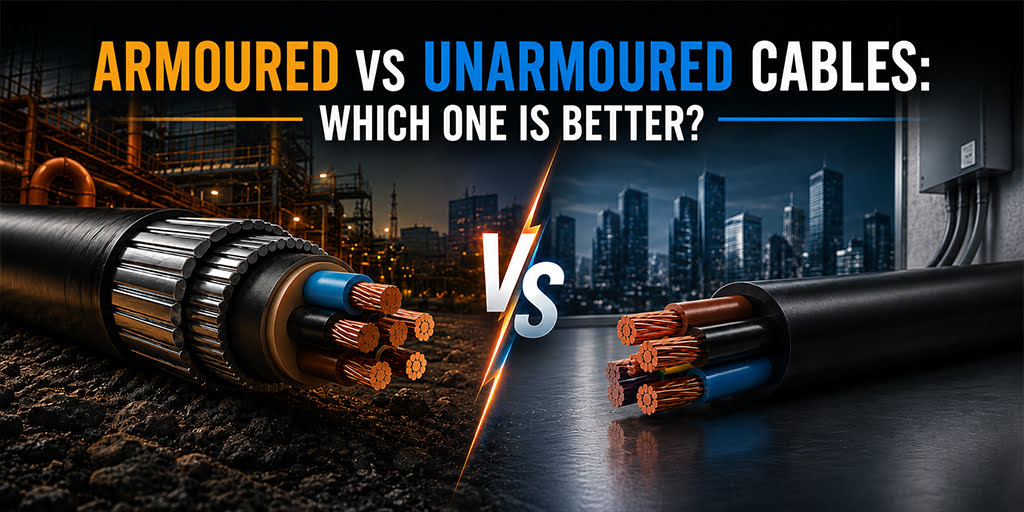
Choosing between armoured and unarmoured cables isn’t simply about selecting the stronger option; it’s about choosing the cable that is best suited to your installation environment. Whether you’re wiring a new home, installing industrial equipment, or planning an outdoor electrical project, understanding the differences can help improve safety, reduce maintenance, and avoid unnecessary costs.
In this guide, we’ll break down the differences between armoured and unarmoured cables to help you choose the right option for your next project with confidence.
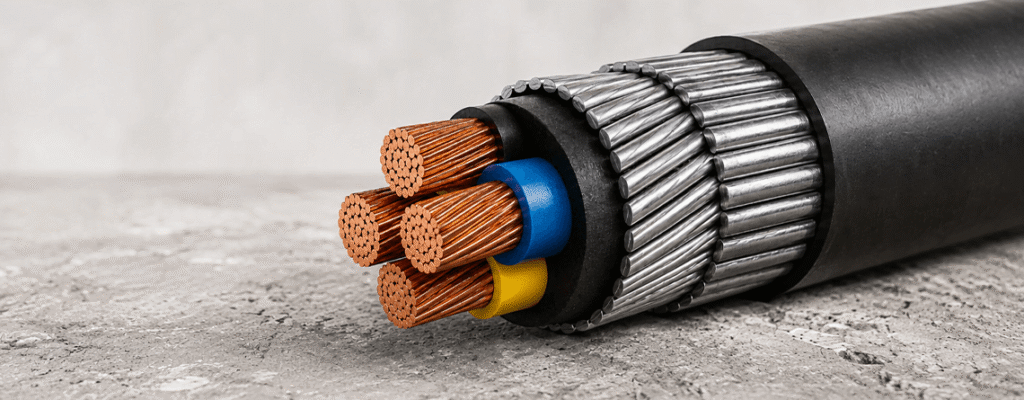
What Are Armoured Cables?
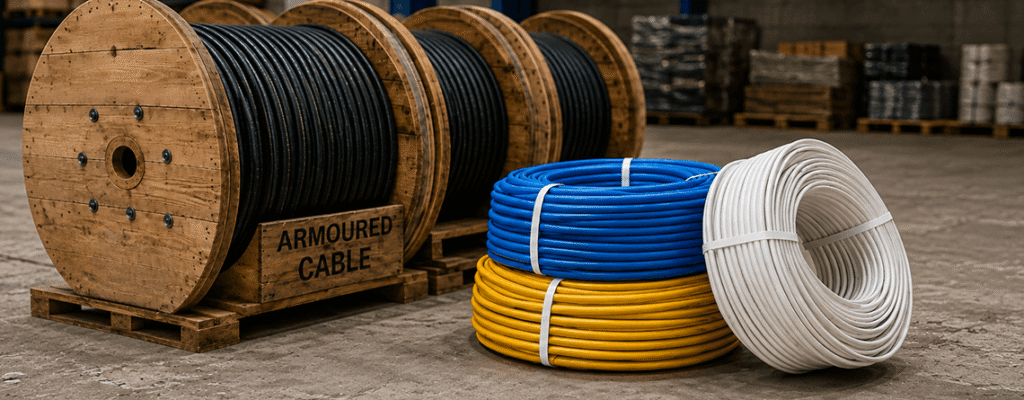
An armoured cable is an electrical cable with an additional layer of protection consisting of steel wires, aluminium wires, or steel tape. This protective armour shields the cable from physical damage, moisture, rodents, and harsh environmental conditions.
Think of it as a cable wearing a safety helmet. If the surroundings are rough, the armour helps protect what’s inside.
These cables are commonly used in:
- Underground installations
- Industrial buildings
- Factories
- Outdoor electrical systems
- Construction projects
- Solar farms
As a trusted armoured cable manufacturer in Pakistan, Universal Cables produces durable cables that perform even in challenging environments.
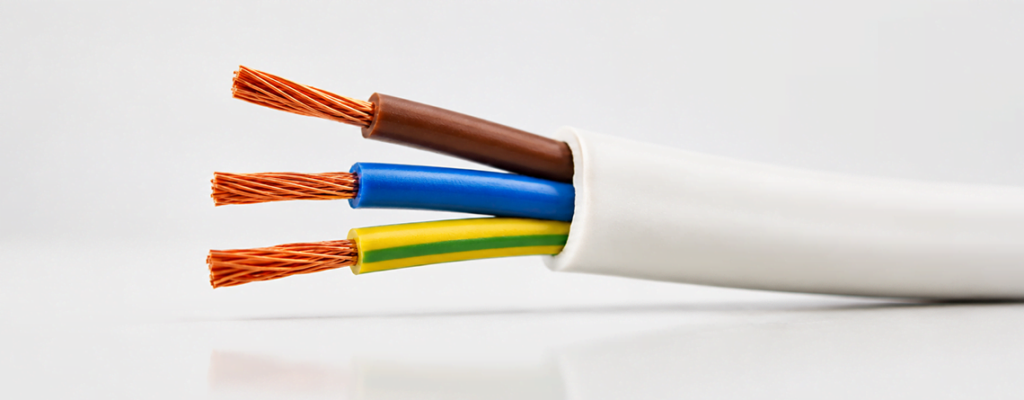
What Are Unarmoured Cables?
Unlike armoured cables, unarmoured cables don’t have an extra metal protective layer. Instead, they rely on their insulation and outer sheath for protection.
They’re lighter, easier to install, and generally cost less than armoured cables.
You’ll usually find them in:
- Indoor electrical wiring
- Office buildings
- Residential homes
- Electrical panels
- Cable trays
- False ceilings
If you’re looking for general house wiring cables, unarmoured cables are often the perfect choice because they are flexible, safe, and easy to handle.
Main Differences Between Armoured and Unarmoured Cables
Let’s compare both options.
1. Protection
Armoured cables provide excellent protection against impacts, crushing, moisture, and accidental digging.
Unarmoured cables provide standard protection and are best installed in areas where they’re unlikely to be exposed to physical damage.
Winner: Armoured cables.
2. Cost
Because of the additional metal armour, armoured cables are more expensive.
Unarmoured cables are budget-friendly and work well for indoor projects.
Winner: Unarmoured cables if cost is your main concern.
3. Installation
Unarmoured cables are lighter and easier to bend, making installation quicker.
Armoured cables are heavier and require more effort during installation.
Winner: Unarmoured cables.
4. Durability
Armoured cables are built for long-term use in demanding environments.
They can handle weather changes, mechanical stress, and outdoor conditions much better.
Winner: Armoured cables.
5. Best Use
Armoured cables are ideal for:
- Outdoor installations
- Underground wiring
- Industrial plants
- Heavy-duty electrical systems
Unarmoured cables are best for:
- Indoor wiring
- Homes
- Offices
- Apartments
There isn’t one cable that’s “better” in every situation. The right choice depends on where you’ll use it.
When Should You Choose Armoured Cables?
Choose armoured cables if your project involves:
- Underground cable installation
- Outdoor electrical systems
- Industrial machinery
- High-risk areas
- Construction sites
- Solar power installations
For example, if someone accidentally digs where your cable is buried, an armoured cable has a much better chance of surviving. Let’s just say it won’t enjoy the impact, but it’s built to handle rough treatment far better than an unarmoured cable.
As a high quality armoured cables manufacturer, Universal Cables designs products that meet demanding performance and safety standards for industrial and commercial applications.
Expert Tip from Universal Cables
Based on our experience manufacturing and supplying certified power cables for residential, commercial, industrial, and infrastructure projects across Pakistan, we typically recommend armoured cables where mechanical protection is required, such as underground distribution and factory installations.
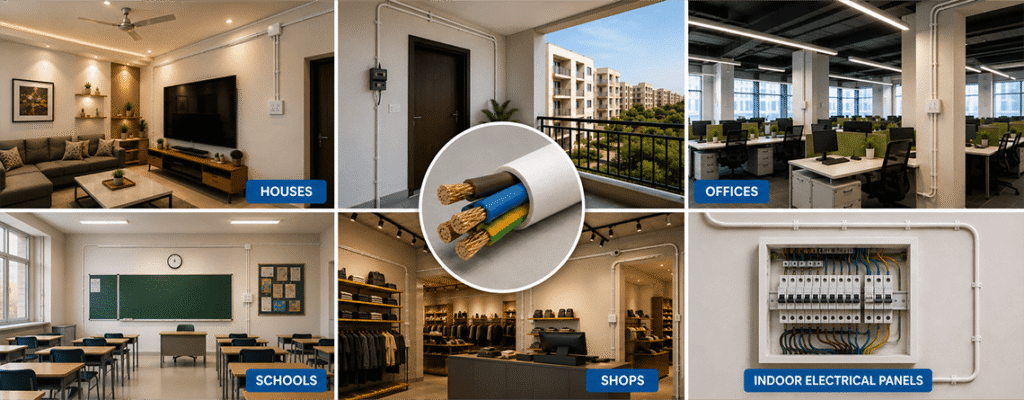
When Are Unarmoured Cables the Better Choice?
If your wiring is safely installed inside walls or conduits, unarmoured cables are usually enough.
They are commonly used for:
- Houses
- Apartments
- Offices
- Schools
- Shops
- Indoor electrical panels
They are easier to bend around corners and much faster to install.
For most homes, general house wiring cables are the practical and cost-effective option.
Are Armoured Cables Always Better?
Not necessarily.
This is one of the biggest misconceptions.
Buying armoured cables for every project is like wearing hiking boots to walk around your living room. They’ll do the job perfectly well, but they might be more protection than your project actually needs.
If the cable is already protected inside a building, an unarmoured cable can perform just as well while saving money.
The best cable is the one that matches your installation environment.
What About Solar Cable Installations?
Solar systems require special cables that can withstand sunlight, heat, and outdoor conditions.
If you’re installing rooftop or ground-mounted solar panels, using high-quality DC solar cables in Pakistan is essential. These cables are specifically designed to carry direct current (DC) safely and efficiently between solar panels and inverters.
In many solar projects:
- DC solar cables connect the solar panels.
- Armoured cables may be used for underground runs or exposed outdoor sections.
- Unarmoured cables may be used inside protected electrical rooms.
Choosing the right combination helps improve safety and system efficiency.
Which Cable Lasts Longer?
Generally, armoured cables have a longer lifespan in harsh environments because the metal armour protects them from external damage.
However, unarmoured cables can also last for many years when installed correctly indoors.
The secret isn’t just buying a good cable; it’s installing the right cable in the right place.
Is Installation Different?
Yes.
Armoured cables require a little more effort because they are heavier and less flexible. Professional installation is also recommended to ensure proper termination and grounding.
Unarmoured cables are much easier to handle, making installation faster and more economical.
In short:
- Easier installation = Unarmoured
- Extra protection = Armoured
How Do You Choose the Right Cable?
Before selecting a cable, ask yourself a few simple questions:
- Will the cable be used indoors or outdoors?
- Is there any risk of physical damage?
- Will it be buried underground?
- Is the area exposed to moisture?
- Do you need extra durability?
Once you’ve answered these questions, choosing the right cable becomes much simpler.
If your project involves factories, outdoor installations, or underground wiring, armoured cables are usually the safer option.
For homes and offices, unarmoured cables are often the smarter and more economical choice.
Why Choose Universal Cables
Selecting the right cable is only half the equation; the manufacturer behind it is equally important.
Universal Cables combines advanced manufacturing processes, certified quality systems, and rigorous product testing to produce electrical cables trusted across residential, commercial, industrial, and infrastructure projects.
Why professionals choose Universal Cables:
- Internationally certified manufacturing and quality systems
- KEMA and TÜV certified products
- ISO certified quality management
- Compliance with relevant IEC standards
- PSQCA certified products for the local market
- High-purity copper conductors
- Strict in-house testing before dispatch
- Comprehensive range of house wiring, power, control, armoured, and solar cables
Whether you’re wiring a home or powering an industrial facility, choosing certified cables helps improve safety, reliability, and long-term performance.
At a Glance
Here’s a quick comparison to make the choice easier.
| Feature | Armoured Cable | Unarmoured Cable |
|---|---|---|
| Mechanical protection | Excellent | Limited |
| Underground use | Yes | Only with additional protection |
| Outdoor use | Yes | Protected installations only |
| Indoor use | Yes | Yes |
| Flexibility | Lower | Higher |
| Installation cost | Higher | Lower |
| Typical applications | Industrial, underground, outdoor | Homes, offices, indoor distribution |
Get in touch with Universal Cables today for expert guidance and premium-quality armoured and unarmoured cables built to last.
Frequently Asked Questions
What is the main difference between armoured and unarmoured cables?
Armoured cables have a protective metal layer, while unarmoured cables rely on insulation and are best for protected indoor use.
Which cable is better for underground installation?
Armoured cables are ideal for underground installations because they offer better protection against impacts, moisture, and other damage.
Can unarmoured cables be used outdoors?
Yes, but only in protected installations like conduits or cable trays. Exposed outdoor areas usually require armoured cables.
Which cable is best for house wiring?
Unarmoured cables are the preferred choice for house wiring as they’re flexible, lightweight, and cost-effective for indoor use.
How do I choose between armoured and unarmoured cables?
Choose armoured cables for outdoor or underground use, and unarmoured cables for protected indoor installations.
Note:
Cable selection should always consider installation conditions, load requirements, applicable electrical codes, and manufacturer recommendations. Where necessary, consult a qualified electrical engineer or licensed electrician before specifying or installing electrical cables.