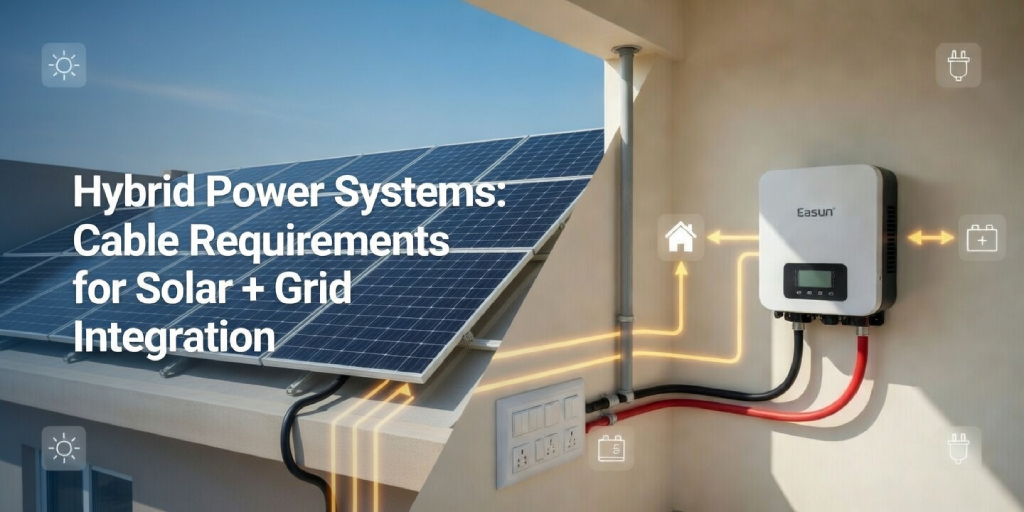
Have you ever installed a solar system expecting lower electricity bills, only to realize the savings aren’t as high as you hoped?
Or have you noticed that your system doesn’t perform consistently, even though all the major components seem perfectly fine?
In many cases, the problem isn’t the solar panels or the inverter; it’s something much less obvious: the selection and design of the cables. As more homes and businesses adopt hybrid power systems (solar + grid), proper cabling becomes critical. It directly impacts efficiency, safety, and long-term performance.
This guide breaks down everything you need to know in a practical, user-focused way so you can make smarter decisions.
What is a Hybrid Power System?
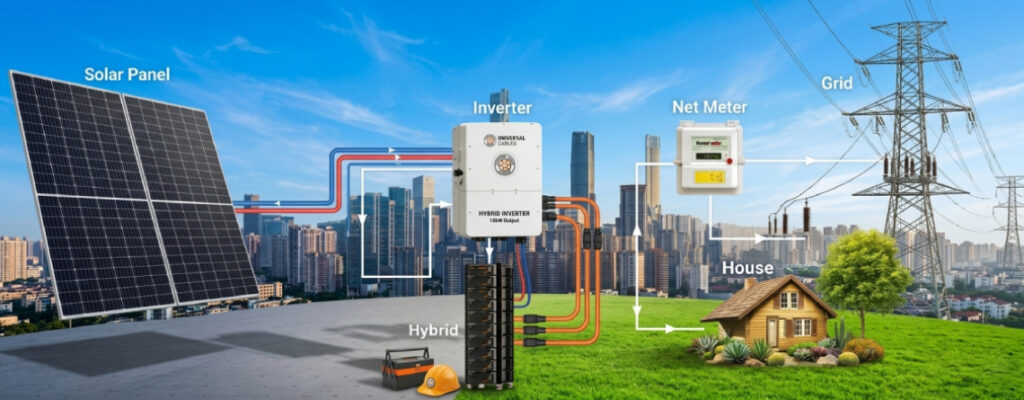
A hybrid power system is a setup that uses both solar energy and grid electricity to power your home or business. Unlike standalone solar systems that rely solely on solar panels and batteries, hybrid systems switch between solar power and grid electricity automatically.
This seamless solar grid integration ensures:
- Continuous power supply, even during cloudy days or at night.
- Reduced electricity bills by prioritizing solar energy whenever available.
- Increased system lifespan, since battery usage is optimized.
But while hybrid systems offer these advantages, improper cabling can compromise safety, efficiency, and performance.
Why Cable Selection Matters in Hybrid Systems
Cables are the backbone of your electrical system. Poor cable choices can lead to:
- Energy losses (lower system efficiency)
- Overheating and fire hazards
- Voltage drops affecting equipment performance
- Reduced lifespan of your system
In a solar hybrid system, cable complexity increases because power flows in multiple directions, especially in setups involving hybrid inverter wiring:
- Solar → inverter → load
- Grid → inverter → load
- Battery (if installed) → system
This makes proper cable planning absolutely critical.
Types of Cables Used in Hybrid Systems
Let’s break it down into the main cable categories you’ll encounter:
1. DC Solar Cables
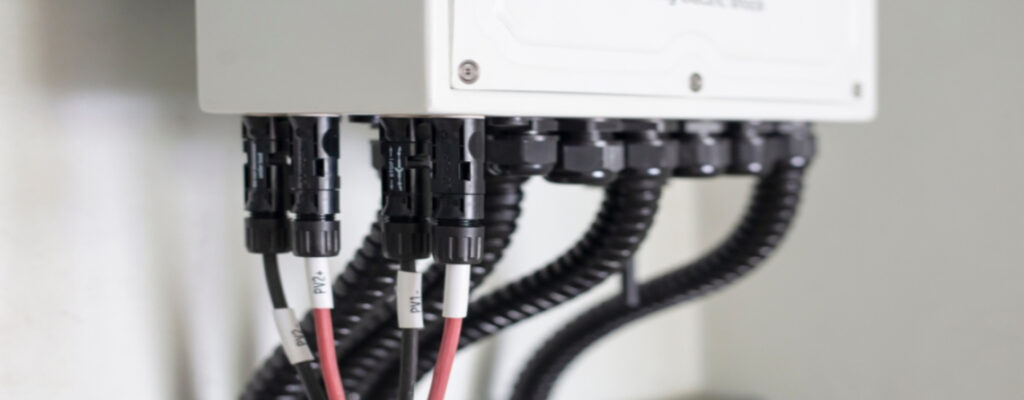
Solar panels generate Direct Current (DC) electricity, which is transmitted to the inverter. For this, solar DC cables are used, and they must meet strict solar PV cabling requirements to ensure durability and performance.
Features to look for:
- UV resistant – Can withstand direct sunlight without degrading.
- Weatherproof – Resistant to rain, dust, and extreme temperatures.
- Low resistance – Minimizes energy loss during transmission.
- Standard Sizes – Commonly 4mm² to 6mm², depending on system capacity.
Benefits for users:
High-quality solar DC cables ensure maximum energy transfer from your panels to your inverter, helping you save more on electricity bills while extending the life of your system.
2. Battery Cables (If Using Storage)
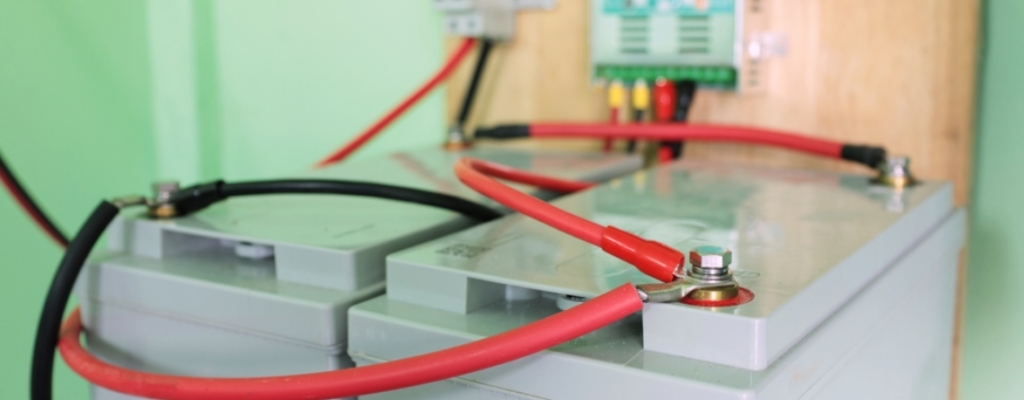
For hybrid systems with a battery bank, electricity flows from the inverter to the battery and vice versa. Battery cables are designed to handle high currents safely.
Features:
- Heavy-duty copper construction – Ensures minimal voltage drop.
- Flexibility – Easier installation and bending around tight spaces.
- Size – Depending on battery capacity, usually 16mm² to 50mm².
Benefits for users:
Using proper battery cables prevents overheating and maximizes battery efficiency, ensuring that your investment in energy storage delivers long-term savings.
How to Choose the Right Cable Size
Cable sizing depends on current load, voltage, distance, and installation environment. Too small a cable can overheat, while an oversized cable increases costs unnecessarily.
General guidelines:
| Cable Type | Typical Size | Key Considerations |
| DC Solar Cable | 4–6 mm² | Minimize voltage drop |
| Battery Cable | 16–50 mm² | High current handling |
| AC Cable | 2.5–6 mm² | Depends on load & distance |
| Grid Cable | 4–10 mm² | Outdoor, durable, armoured optional |
| Earthing Cable | 6–10 mm² | Continuous grounding |
Tip for users: Always consult a licensed electrician or solar installer for accurate sizing. Correct cable selection not only saves energy but also protects your investment.
Common Mistakes You Should Avoid
Let’s save you from costly errors:
❌ Using low-quality or generic cables
❌ Ignoring voltage drop calculations
❌ Mixing DC and AC cabling improperly
❌ Not considering future expansion
❌ Poor termination and connections
Each of these can reduce system performance or even lead to failure.
How the Right Cabling Benefits You Directly
Let’s focus on what you actually gain:
1. Higher Energy Efficiency: Better cables mean less energy loss, so you maximize your solar investment.
2. Lower Electricity Bills: Efficient power transfer reduces reliance on grid electricity.
3. Increased System Lifespan: Proper cables protect your inverter, batteries, and panels.
4. Improved Safety: Reduces risk of overheating, short circuits, and fire hazards.
5. Scalability: Good cable planning makes future upgrades easier and cheaper.
Real-World Insight: Think Long-Term, Not Cheap
Many system owners try to cut costs on cables, but this often backfires.
Example:
Saving 10–15% on cable cost can lead to:
- 5–10% energy loss every year
- Frequent maintenance
- Early equipment failure
Over time, this costs far more than investing in the right cables upfront.
Why Experience & Quality Standards Matter
Now that you understand how critical proper cabling is for solar hybrid systems, it’s equally important to source these cables from a trusted manufacturer. Not all cables are created equal, and in high-stakes applications like hybrid solar + grid integration, cutting corners can lead to system inefficiency, safety risks, and long-term costs.
Partnering with an experienced electrical cables manufacturer who follows international standards such as ISO and TUV certifications ensures:
- Consistent performance under load
- Durability in harsh environments
- Full compliance with safety requirements
With decades of industry experience, trusted manufacturers understand that every project is unique and requires high-performance cable solutions designed to last.
This is where Universal Cables Industries Ltd. (UCIL) plays an essential role.
With over four decades of expertise in Pakistan’s electrical industry, UCIL designs and manufactures cables built to perform under extreme temperatures, heavy electrical loads, and long operational hours.
Backed by internationally recognized certifications such as ISO 14001:2015, KEMA Gold, and TUV Austria, UCIL’s solutions are engineered for durability, efficiency, and long-term reliability.
For project owners, engineers, and installers, working with UCIL isn’t just about buying cables; it’s about ensuring consistent performance, minimizing risks, and gaining complete peace of mind throughout your hybrid system’s lifecycle.
Contact UCIL today to secure top-class cables and unmatched expertise for your hybrid power system.
In the End
Hybrid power systems are a smart move, but only when every component works efficiently together. Cables may not be the most visible part of your system, but they are one of the most important.
If you’re planning a solar + grid setup, don’t treat cable selection as an afterthought. It’s a strategic decision that directly affects your:
- Energy savings
- System reliability
- Safety
- Long-term ROI
The bottom line:
The right cables don’t just carry electricity; they protect your investment.