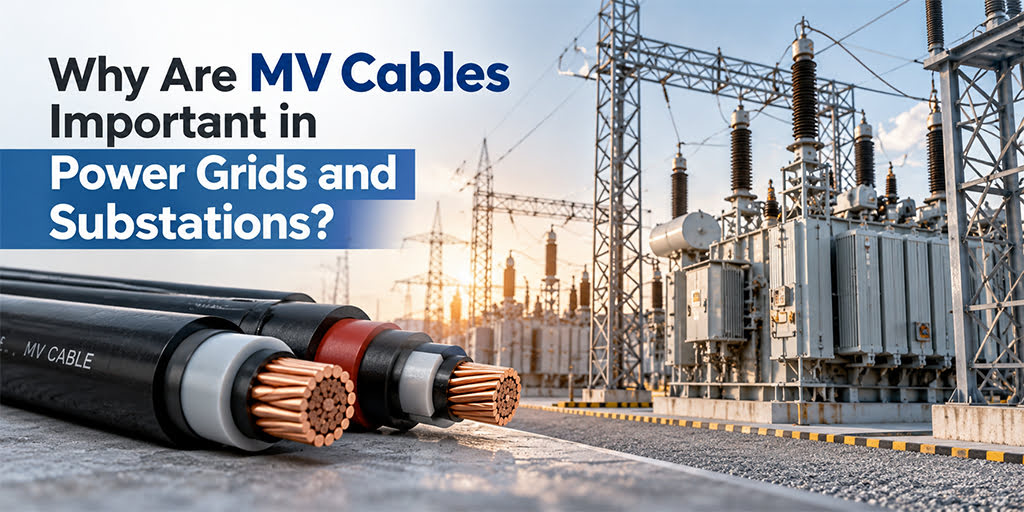
Medium voltage (MV) cables form a vital link between substations, distribution transformers, switchgear, and major electrical loads. They carry power across utility networks, industrial facilities, and electrical infrastructure projects where low-voltage distribution alone is not suitable for the system design.
Their performance affects how reliably electricity reaches the equipment and facilities that depend on it. Choosing the right MV cable requires more than matching a voltage rating: engineers must account for load current, short-circuit conditions, insulation and screening, installation method, and the operating environment.
This guide explains where MV cables are used, how their construction supports safe operation, and which engineering factors matter when specifying them for power grids and substations.
What Are Medium Voltage Cables?
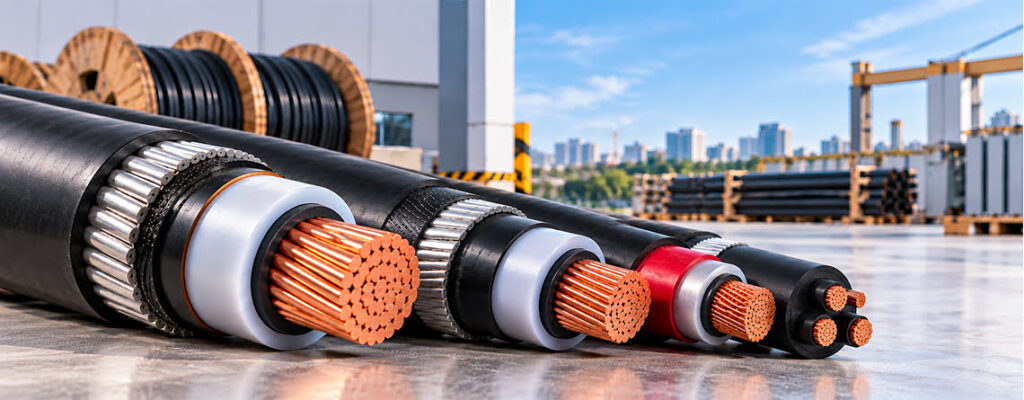
Medium voltage (MV) cables are insulated power cables used in medium-voltage electrical distribution systems. Within the scope of IEC 60502-2 referenced in this article, the standard covers extruded-insulation power cables rated from 6 kV up to 30 kV, with Um values up to 36 kV. Voltage classifications can differ depending on the applicable standard, utility, and project specification.
They are widely used in:
- Power distribution networks
- Electrical substations
- Industrial plants
- Utility projects
- Commercial developments
- Renewable energy systems
- Underground electrical networks
- Infrastructure projects
These cables use specialized insulation, screening, and protective layers to operate safely under demanding electrical conditions.
The exact voltage range and cable construction can vary according to project specifications, international standards, and local utility requirements.
Why Are MV Cables Important in Power Grids?
A power grid includes several connected systems that generate, transmit, transform, and distribute electricity. Reliable grid cables are needed to maintain smooth electrical flow between these systems.
Medium voltage cables support power grids by offering:
- Efficient power distribution: They help move electricity between substations, transformers, and high-demand facilities.
- Reliable operation: Properly selected cables support stable and continuous electricity supply.
- Electrical stress control: The insulation and semi-conductive screening system helps maintain a controlled electric field around the conductor and insulation system.
- Mechanical strength: Protective layers help cables withstand installation conditions and physical pressure.
- Long-term performance: Quality cables are designed to work reliably in demanding environments.
Incorrect wires and cables selection can affect thermal performance, insulation reliability, short-circuit withstand capability, and the long-term reliability of the distribution system.
The Role of MV Cables in Substations
Substations are key points in a power distribution network. They help control voltage levels and direct electricity to different areas.
Inside and around substations, electrical cables may connect transformers, switchgear, protection systems, and outgoing feeders.
The importance of correct cable design and installation in substations is also recognized by IEEE 525-2025, which guides the design, installation, and protection of insulated cable systems in substations to help minimize cable failures and their consequences.
Medium voltage cables are used in these applications because they are designed to operate safely at medium-voltage system levels while carrying the required current when correctly sized for the installation conditions.
Depending on the project, MV cables may be installed:
- Underground
- In cable trenches
- Through ducts
- In industrial cable systems
- Between transformers and switchgear
Proper installation, termination, testing, and maintenance matter because cable performance directly affects overall system reliability.
Why MV Cable Construction Matters
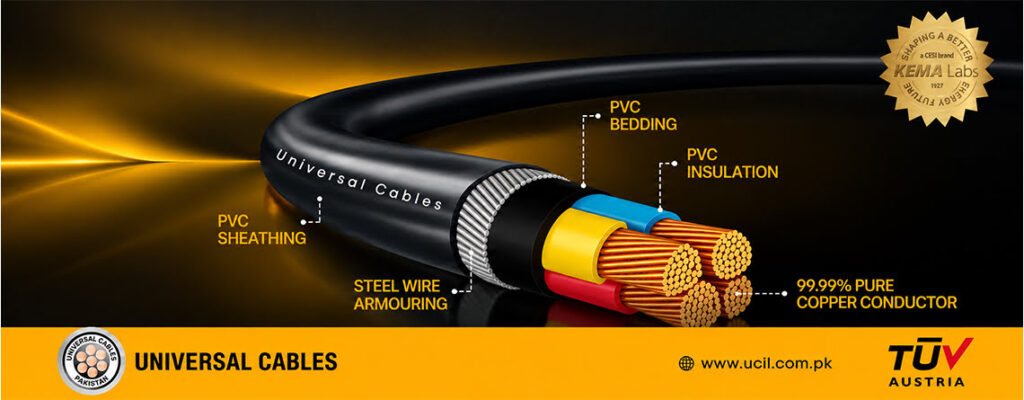
Medium-voltage cables contain layers that perform different electrical and protective functions. Their arrangement depends on the cable design, rated voltage, installation requirements, and applicable specification.
| Cable Component | Main Function |
|---|---|
| Conductor | Carries electrical current. |
| Conductor screen | Provides a suitable interface around the conductor as part of the electrical stress-control system. |
| Insulation | Provides electrical separation between the conductor and surrounding conductive layers. |
| Insulation screen | Supports control of the electric field around the insulation. |
| Metallic screen | Provides a conductive screening path; its design and bonding must suit the system requirements. |
| Protective bedding | Provides a suitable layer between underlying cable components and additional protection, where used. |
| Armour, where required | Provides mechanical protection appropriate to the installation. |
| Outer sheath | Protects the cable against environmental and physical conditions for which it is designed. |
Confirm the exact construction in the cable datasheet and applicable specification. Not every MV cable includes the same protective layers.
Medium Voltage vs Low Voltage Cables
Low-voltage (LV) and medium-voltage (MV) cables serve different purposes within electrical systems. LV cables are commonly used for building circuits, equipment supplies, lighting, and lower-voltage distribution. MV cables are used in distribution networks, substations, transformer connections, and major electrical loads. The appropriate cable category depends on the system voltage, applicable standards, and project design.
For a more detailed comparison, read our related guide: Difference Between Low-Voltage and Medium-Voltage Cables.
Practical Engineering Considerations for MV Cable Projects
Selecting a medium-voltage (MV) cable requires more than matching its voltage rating. Engineers must consider electrical loading, installation conditions, environmental exposure, and applicable project standards.
Key factors include:
- Electrical requirements: System voltage, operating current, and short-circuit conditions determine the required cable rating and conductor size.
- Installation method: Underground ducts, substation trenches, and free-air installations have different thermal conditions that affect current-carrying capacity.
- Cable construction: Conductor material, insulation, metallic screening, armour, and sheath requirements depend on the application.
- Environmental conditions: Soil temperature, moisture, chemical exposure, and mechanical damage risks may affect cable protection and construction.
- Standards and testing: Cable selection and installation must meet applicable IEC, BS, utility, and project requirements.
For example, underground cables may require careful evaluation of soil thermal resistivity and burial depth, while substation installations may require additional consideration of cable grouping, fault conditions, and mechanical protection. Industrial plants may also have specific chemical exposure and routing requirements.
Verify final cable selection through engineering calculations, manufacturer data, and applicable project specifications.

How to Choose the Right Medium Voltage Cable
Choose an MV cable based on engineering requirements, not voltage rating alone.
IEC 60287-1-1:2023 provides methods for calculating cable current ratings under steady-state conditions and covers cables installed directly in the ground, in ducts, troughs, steel pipes, and in air.
Important factors include:
- System voltage
- Current-carrying capacity
- Short-circuit requirements
- Conductor material
- Cable size
- Insulation type
- Installation method
- Operating temperature
- Moisture exposure
- Mechanical protection
- Applicable IEC, BS, utility, or project standards
Qualified electrical professionals should evaluate these factors before selecting and installing cable.
What Information Should You Provide When Requesting an MV Cable Quotation?
Preparing the relevant project information can help a cable supplier understand the application and assess the required cable construction.
Before requesting a quotation, gather the following details where available:
- Nominal system voltage and required cable voltage designation.
- Required conductor material and cross-sectional area, if already specified.
- Continuous load current and short-circuit requirements.
- Installation method, route conditions, and approximate cable length.
- Insulation, metallic screen, armour, and sheath requirements.
- Environmental conditions, including temperature and moisture exposure.
- Applicable IEC, BS, utility, and project specifications.
- Required accessories, testing documentation, quantities, and delivery schedule.
If some details are not yet available, identify them as outstanding rather than assuming values. Confirm final cable construction and sizing through the project’s engineering process.
Get the Right MV Cables for Your Project
Planning a power distribution, substation, industrial, or infrastructure project?
Contact Universal Cables to discuss your cable requirements, share your project specifications, and enquire about suitable medium-voltage cable options.
Frequently Asked Questions
What are MV cables used for?
Medium-voltage (MV) cables distribute power in substations, industrial facilities, utility networks, commercial developments, and renewable energy installations.
Why are MV cables important in substations?
They connect transformers, switchgear, and other equipment while meeting the system’s electrical, thermal, and mechanical requirements.
Can medium-voltage cables be installed underground?
Yes. MV cables can be installed underground, in ducts, or in cable trenches, provided the installation meets thermal, moisture, and mechanical protection requirements.
What is the difference between MV and LV cables?
MV cables are designed for medium-voltage distribution systems, while low-voltage (LV) cables serve lower-voltage distribution and final circuits.
What factors affect MV cable current-carrying capacity?
Cable capacity depends on conductor size and material, insulation, operating temperature, installation method, cable grouping, and surrounding environmental conditions.
References
- IEC 60502-2:2014+AMD1:2024 CSV/COR1:2026 — Power cables with extruded insulation and their accessories — Part 2.
- IEEE 525-2025 — IEEE Guide for the Design and Installation of Cable Systems in Substations.
- IEC 60287-1-1:2023 — Electric cables — Calculation of the current rating — Part 1-1.
Technical Note: Verify final cable selection, sizing, installation, and protection against applicable standards, project specifications, utility requirements, system studies, and local regulations.