By Universal Cables Editorial Team | Reviewed by Electrical Cable & Power Distribution Specialists | June 2026
Would you trust a highway built 50 years ago to handle today’s traffic without upgrades? Questions about aluminium wiring safety frequently arise in discussions about commercial buildings. Many people hear the words “aluminium wiring” and immediately think of safety concerns, electrical problems, or outdated construction methods.
But is aluminium wiring really unsafe in modern commercial buildings? Or has technology improved enough to make it a reliable option again?
The truth is that modern aluminium wiring is very different from the aluminium wiring used decades ago. When designed, installed, and maintained properly, aluminium cables can be a safe, efficient, and cost-effective solution for commercial projects.
In this article, we’ll explain how aluminium wiring works, its advantages, potential challenges, and whether it is a smart choice for today’s commercial buildings.

What Is Aluminium Wiring?
Aluminium wiring uses aluminium conductors to carry electrical current throughout a building. It serves the same purpose as copper wiring but offers some unique advantages.
Aluminium has been used in electrical applications for decades and is commonly found in power distribution systems, commercial facilities, industrial plants, and utility networks.
Today, many organizations work with a trusted aluminium cables manufacturer to obtain high-quality cables that meet modern safety and performance standards.
Why Is Aluminium Wiring Popular?
One of the biggest reasons for aluminium’s popularity is its cost-effectiveness.
After all, every construction project has a budget. If builders could save money without sacrificing performance, they would probably celebrate with an extra cup of tea.
Aluminium offers several practical benefits:
- Lower material cost
- Lightweight construction
- Easier transportation
- Good electrical conductivity
- Suitable for large-scale installations
Because aluminium is lighter than copper, it is often easier to handle during installation, especially in large commercial projects.
This is one reason many contractors partner with an experienced aluminium wires and cables manufacturer in Pakistan for commercial developments.
What Do Industry Standards Say About Aluminium Wiring?
Modern aluminium conductors are widely recognized and approved under international electrical standards, including:
- IEC 60228 (Conductors of insulated cables)
- IEC 60502 (Power cables)
- National Electrical Code (NEC)
- UL-listed aluminium conductor requirements
When installed using approved connectors and current electrical codes, aluminium conductors are considered safe for commercial power distribution systems.
Why Commercial Buildings Use Aluminium Cables?
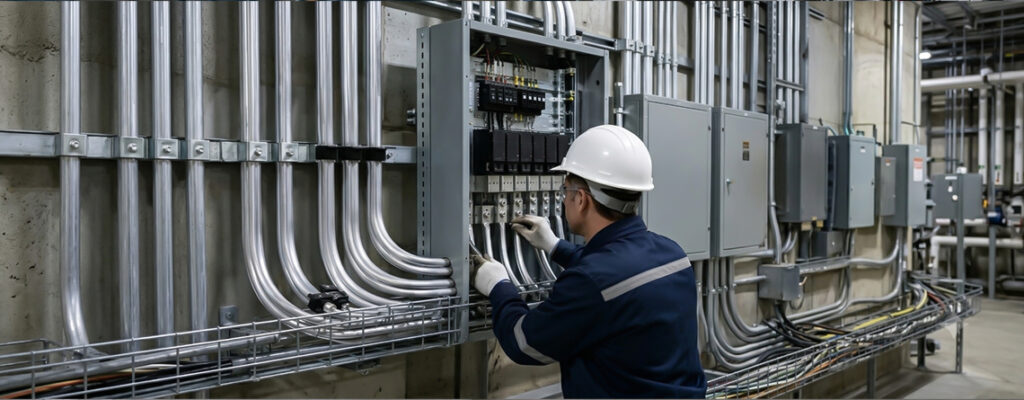
Commercial buildings often require large amounts of electrical cable for power distribution. Since aluminium is lighter and more affordable than copper, it offers several practical advantages.
1. Cost Savings:
One of the biggest reasons builders choose aluminium wiring is cost efficiency. Aluminium is generally less expensive than copper, making it an attractive option for large commercial projects.
For shopping malls, office towers, warehouses, factories, and educational facilities, these savings can be substantial without sacrificing performance when the correct cable type is selected.
2. Lightweight Design:
Aluminium weighs significantly less than copper. Its lighter weight simplifies transportation, handling, and installation.
Imagine carrying a heavy copper cable reel up several floors. Your back might start preparing a resignation letter! Because aluminium is lighter, it is easier to handle during installation, helping streamline project execution.
3. Excellent Conductivity:
Despite having lower conductivity than copper, aluminium provides effective electrical performance in commercial systems. Engineers simply use larger conductor sizes when necessary to achieve the required electrical performance.
This makes aluminium a practical solution for power distribution systems in commercial environments.
4. Corrosion Resistance:
Modern aluminium conductors are designed to resist corrosion and environmental damage. With proper installation and maintenance, they can provide reliable service for many years.
Is Modern Aluminium Wiring Safe?
The simple answer is yes, modern aluminium wiring can be safe when installed according to current electrical standards and manufacturer recommendations.
Advances in manufacturing have made today’s aluminium cables safer and more reliable than previous generations.
Safety depends on several factors:
- High-quality cable manufacturing
- Proper cable sizing
- Correct installation practices
- Approved connectors and terminals
- Regular inspections and maintenance
When these requirements are met, aluminium wiring can safely support commercial electrical systems.

Where Is Aluminium Wiring Commonly Used?
Aluminium wiring is widely used in commercial and industrial environments that require efficient power distribution across large electrical systems.
Common applications include:
- Office buildings
- Shopping centers
- Factories
- Warehouses
- Hospitals
- Educational institutions
- Data centers
In many of these projects, aluminium cables are used for distribution systems and power transmission networks.
Their lightweight design makes them particularly attractive for large-scale installations.
Real-World Commercial Applications
At Universal Cables, aluminium conductors have been supplied for commercial buildings, industrial facilities, warehouses, and infrastructure projects across Pakistan. In many large-scale projects, aluminium cables were selected because they reduced installation costs while maintaining reliable electrical performance and compliance with project specifications.
How Does Aluminium Compare to Copper?
Many people ask whether aluminium is better than copper.
Both aluminium and copper offer distinct advantages, making them suitable for different applications.
Copper offers excellent conductivity and is often preferred for smaller applications and certain internal wiring systems.
Aluminium offers a practical combination of performance and cost-effectiveness, making it well-suited for large commercial projects.
Here is a simple comparison:
| Feature | Aluminium | Copper |
| Cost | More economical | Higher cost |
| Weight | Lightweight | Heavier |
| Conductivity | Good conductivity | Higher conductivity |
| Installation | Easier to handle | More difficult to handle |
| Conductor Size | Larger size required | More compact size |
| Best For | Large-scale projects and long cable runs | Smaller applications and internal wiring |
For many commercial applications, aluminium offers an excellent balance of performance and affordability. The final choice depends on project requirements, budget, electrical load, and installation conditions.
What Role Does Proper Installation Play?
Cable quality and installation go hand in hand, as improper installation can affect the performance of even the best products.
Think of it this way.
You could buy the best cricket bat in the world, but if someone holds it upside down, scoring runs will still be difficult.
The same principle applies to electrical systems.
Proper installation ensures:
- Secure electrical connections
- Reduced heat generation
- Long-term reliability
- Enhanced safety
- Improved efficiency
Qualified electricians and engineers understand how to work with aluminium conductors and follow installation guidelines to maximize safety.
Can Aluminium Wiring Support Modern Energy Demands?
Absolutely.
Modern commercial buildings consume more electricity than ever before. Air conditioning systems, elevators, security equipment, lighting networks, and IT infrastructure all require reliable power distribution.
High-quality aluminium cables are designed to handle these growing energy requirements effectively.
In fact, many renewable energy and infrastructure projects use aluminium conductors because they offer an efficient solution for large-scale power transmission.
Companies that work with the best solar cables manufacturer often understand the importance of selecting cables that can support both traditional electrical systems and renewable energy applications.

What Should Businesses Look for When Choosing Aluminium Cables?
Selecting the right cable supplier is one of the most important decisions in any commercial project.
Businesses should focus on:
- Quality standards: Always choose cables manufactured according to recognized industry standards.
- Proven experience: An experienced aluminium cables manufacturer understands the technical requirements of modern electrical systems.
- Reliable testing: Quality cables undergo rigorous testing to ensure safety, durability, and performance.
- Technical support: A knowledgeable cables supplier in Pakistan can help customers select the appropriate cable solutions for their specific projects.
- Long-term reliability: Investing in quality cables today can help reduce maintenance costs and operational issues in the future.
Why Does Cable Quality Matter?
Electrical systems are long-term investments.
While buildings may undergo renovations, expansions, or equipment upgrades over time, the wiring infrastructure often remains in place for decades.
Low-quality cables can lead to:
- Increased maintenance
- Reduced efficiency
- Unexpected downtime
- Higher operating costs
This is why many project developers prefer working with a reputable electrical wires and cables manufacturer that prioritizes quality and performance.
Reliable cables contribute to safer buildings and more dependable operations.
Need a Dependable Cable Manufacturer?
Universal Cables delivers reliable, high-quality cable solutions for commercial, industrial, and renewable energy projects. As a trusted aluminium wires and cables manufacturer in Pakistan, we focus on safety, durability, and long-term performance. From house wiring electrical cables to aluminium conductors and power cables, Universal Cables provides solutions businesses can depend on.
Why Trust Universal Cables?
- Established manufacturer of electrical cables and conductors
- Experience serving commercial, industrial, and infrastructure projects
- Products manufactured according to applicable industry standards
- Focus on safety, durability, and long-term performance
- Technical guidance provided by experienced engineering professionals
What’s the Bottom Line?
Yes, modern aluminium wiring is safe, proven, and cost-effective when manufactured to high standards and installed correctly. Its lightweight build, affordability, and suitability for large-scale systems make it a genuinely smart choice for commercial applications.
By partnering with a trusted aluminium cables manufacturer or sourcing from an experienced aluminium wires and cables manufacturer in Pakistan, businesses can build electrical systems that perform safely for decades.
Ready to build smarter? Contact Universal Cables today and get expert guidance on the right cable solution for your project, before the walls go up.
Frequently Asked Questions
1. Is aluminium wiring approved by modern electrical codes?
Yes. Modern aluminium conductors are approved under recognized electrical standards when installed correctly.
2. How long does aluminium wiring last?
High-quality aluminium conductors can provide decades of reliable service when properly installed and maintained.
3. Is aluminium wiring suitable for data centers?
It is commonly used for power distribution systems in many commercial and industrial facilities, including data centers.
4. Is copper safer than aluminium?
Both materials can be safe when designed and installed according to applicable standards.