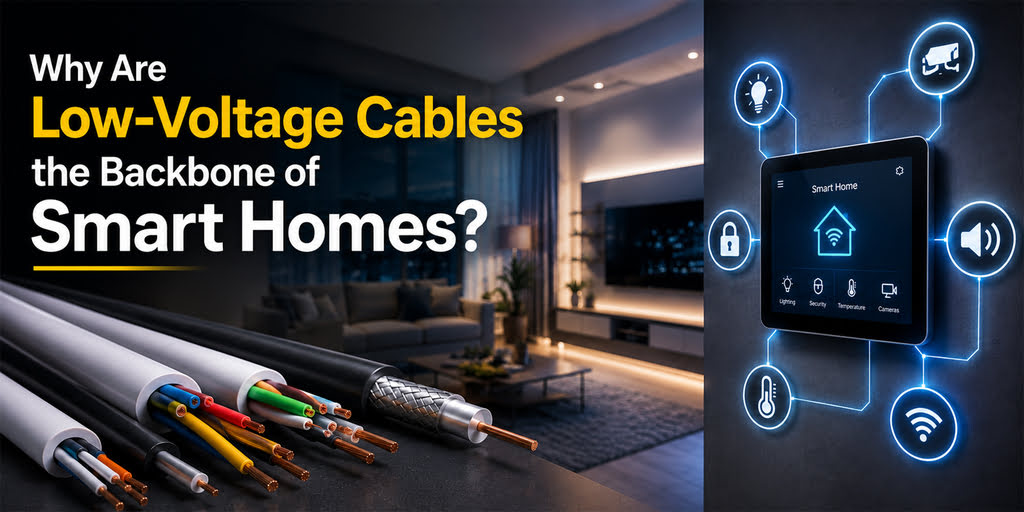
Smart homes are having an impact on the way we live. Whether it’s security cameras and smart doorbells, automated lighting, internet-connected appliances, or temperature controls, nowadays homes place greater reliance on technology. Yet behind all these smart devices, there is something that homeowners seldom see: Low voltage cables.
Good low-voltage wiring creates the communication network that allows smart devices to work reliably. When planned alongside proper house wiring and electric wires, it can make a home safer, more connected, easier to manage, and ready for future technology.
For homeowners planning home automation in Pakistan, understanding the role of low-voltage cabling can help them build a smarter infrastructure from the beginning.
What Are Low-Voltage Cables?
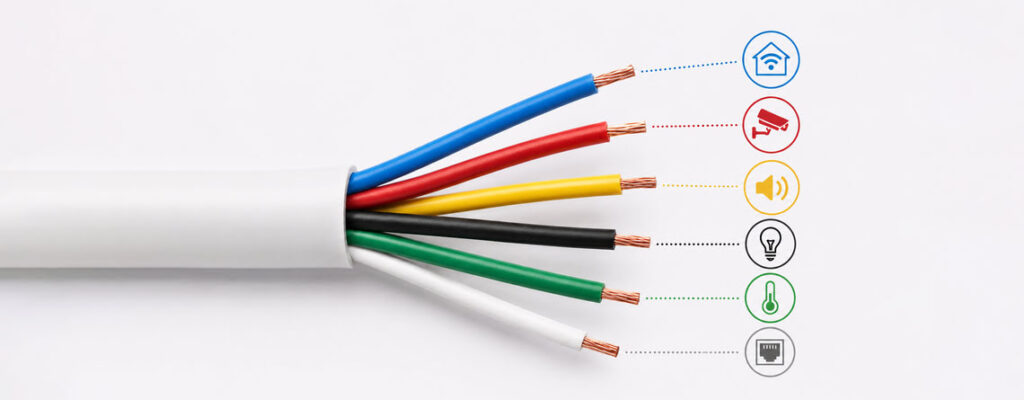
Low-voltage cables are designed for systems that operate at lower voltage levels than standard electrical power circuits. Instead of supplying the main electrical power appliances and outlets need, many low-voltage cables carry data, signals, audio, video, and control information.
They are commonly found in:
- Internet and Ethernet networks
- CCTV and security camera systems
- Smart doorbells and access controls
- Alarm and security systems
- Intercom systems
- Telephone connections
- Audio and video systems
- Smart lighting controls
- Sensors and home automation systems
Imagine standard electrical wiring supplying the power that a house requires, while low-voltage wiring usually provides the communication pathways that smart systems need.
Why Is Low-Voltage Wiring Important for Home Automation?
Home automation depends on communication. A smart device must send or receive information so commands can be carried out correctly.
For instance, a security camera might have to transmit video to a recorder or a network, while a smart lighting controller would need to receive instructions and sensors would need to communicate data regarding movement, temperature, doors, or windows.
Even though a great many modern devices make use of Wi-Fi, it might not always be best to depend entirely on wireless communication. The performance of Wi-Fi can be influenced by distance, walls, interference, network congestion, and the number of devices that are connected.
Properly installed low voltage cables for smart homes can provide stable wired connections for compatible devices. This makes them an important part of reliable smart infrastructure.
How Do Low-Voltage Cables Make Smart Homes More Reliable?
A major advantage of having wired infrastructure is the consistency it provides.
Although wireless devices are convenient, their performance is very much dependent on the quality of the wireless network; using wired connections can decrease the reliance on Wi-Fi for devices that support Ethernet or other kinds of wired communication.
Good low-voltage wiring may provide:
- More stable data transmission
- Consistent connectivity for compatible devices
- Better support for high-bandwidth applications
- Less wireless network congestion
- Reliable connections for security equipment
- Easier integration of multiple smart systems
In the case of important systems such as security cameras, access controls, and network equipment, a carefully designed wired connection is especially valuable.
Can Low-Voltage Wiring Improve Home Security?
Yes. Security is one of the most common applications of low-voltage cabling.
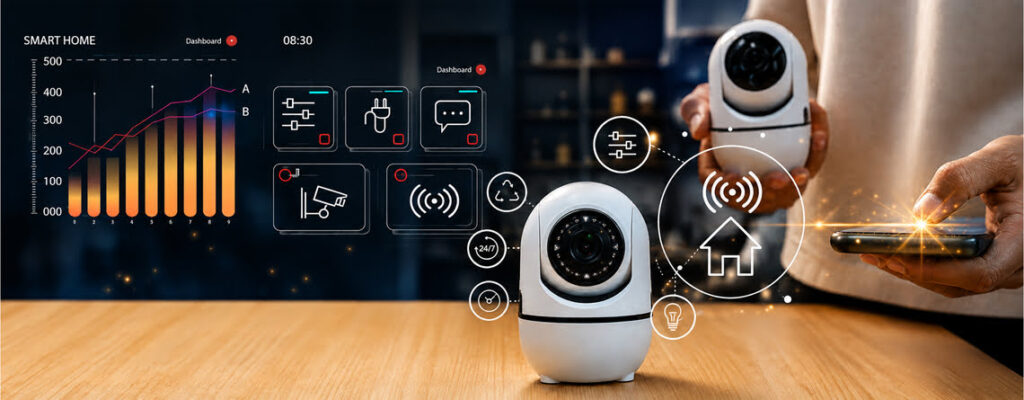
Depending on the design of the system, CCTV cameras, alarm panels, motion sensors, intercoms, and access-control equipment might all make use of low-voltage wiring.
A planned wired security network that is planned can help homeowners to establish dedicated connections rather than having to rely completely on wireless signals.
For example, some IP security cameras use Power over Ethernet (PoE) technology. A compatible Ethernet cable and PoE equipment can carry both data and power to supported devices, helping simplify installation.
The cable and equipment needed should always conform to the specifications of the device manufacturer and to the relevant electrical standards.
Why Should Low-Voltage Wiring Be Planned During Construction?
Cable planning is most effective in residential projects before plastering, false ceilings, cabinetry, and other finishes are put in place and limit access to the cable routes.
Expert Opinion: When carrying out residential installations, it is possible to avoid troublesome cable routing, exposed cable runs, and the need for unscheduled modifications after the work has been finished if the electrical, networking, CCTV, and automation requirements are coordinated at an early stage.
If you install the smart-home equipment when the house is being built or renovated, you can neatly route the cables to the important places, and this also helps to lessen the need for obvious cables or for major alterations later on.
Homeowners can consider cable routes for:
- Wi-Fi access points
- Security cameras
- Smart TVs and entertainment areas
- Doorbells and intercoms
- Alarm sensors
- Home offices
- Network equipment
- Smart controllers and automation hubs
This approach also improves cable management. Clearly planned and labeled cables are easier for technicians to identify, troubleshoot, upgrade, or replace.
How Does Low-Voltage Cabling Prepare a Home for the Future?
It’s not enough just to fit in more cable when preparing for the future. You should take into account the cable category, the way the conductor is constructed, the conditions in which it is to be installed, the bandwidth needed, the PoE requirements, and the equipment that will be connected to it. For instance, homeowners who are setting up an Ethernet system should choose their cabling according to their network needs rather than just requesting a general “internet cable“.
Good infrastructure provides flexibility.
For example, if Ethernet cabling is properly positioned, it will be able to meet today’s networking requirements as well as support future compatible cameras, access points, entertainment devices, and automation equipment.
It is not essential for homeowners to fit every smart device in at once. If you plan the cable routes and include connection points when building the property, this will make any future upgrades simpler and less disruptive.
Which is why low-voltage cabling should be considered as a part of the home’s long-term infrastructure rather than something added later.
Are Low-Voltage Cables the Same as Regular Electric wires?
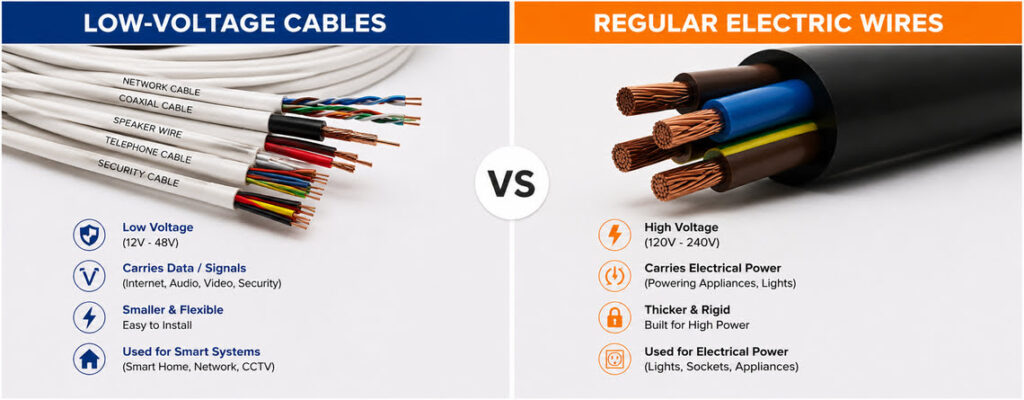
No. They serve different functions and should be selected for their intended applications.
Standard electric wires distribute electrical power to lights, switches, outlets, fans, air conditioners, and other electrical loads. Low-voltage cables may be used for communication, control, data, security, or other specialized systems.
IEC 60364-5-52, which covers the selection and erection of wiring systems in low-voltage electrical installations, includes requirements concerning the proximity of power and telecommunications cables.
The correct cable depends on factors such as:
- System type
- Voltage and current requirements
- Data requirements
- Installation environment
- Cable length
- Equipment specifications
- Applicable electrical and building standards
Which Low-Voltage Cables Does A Smart Home Actually Need?
Smart homes need different low-voltage cables depending on the connected systems and devices.
| Application | Typical Cabling Consideration |
|---|---|
| Internet & Wi-Fi access points | Ethernet cable suited to network requirements |
| IP CCTV cameras | Ethernet/PoE-compatible cabling where supported |
| Video doorbells | Device-specific power/data requirements |
| Alarm & security sensors | Security/control cable specified by the system |
| Intercoms | Manufacturer-specified communication cable |
| Smart TVs | Ethernet and/or AV cabling depending on setup |
| Automation systems | Protocol- and manufacturer-specific wiring |
Cable requirements vary by system, so always check the device manufacturer’s specifications before installation.
Why Is Cable Quality Important in a Smart Home?
The performance of a smart system can only be as good as that of the infrastructure which supports it.
Cables of poor quality or those that are incorrectly chosen can lead to unreliable connections, weak performance, maintenance problems, or the need for early replacement. The importance of selecting the right cables is even greater when the cabling is installed in walls, conduits, or ceilings, since replacement in such cases may be difficult.
Homeowners and installers ought to take into account the purpose for which the cable is to be used, the quality of the conductor, the insulation, the specifications, the environmental conditions, and the cable’s compatibility with the equipment to which it is connected.
For concealed installations, cables should be selected carefully because replacing them may require reopening walls or ceilings. Homeowners must select cables from a reliable manufacturer that have clear specifications and make sure that the cables are suitable for the purpose for which they are to be used.
Why Is Smart Infrastructure Becoming Important in Pakistan?
In Pakistani households, the use of CCTV systems, video doorbells, Wi-Fi networks, smart lighting, connected appliances, and automated security is becoming more widespread, so electrical planning now has to take into account both the power and data infrastructure. This is particularly so when carrying out new builds or major renovations, since you can plan the routes for the cables and the locations of the connections before the work is finally completed.
When constructing a new house or carrying out renovations on an existing one, planning the power and communication systems can prevent having to make unneeded changes later on.
The Pakistan Engineering Council (PEC) lists the Pakistan Electric and Telecommunication Safety Code (PETSAC) 2014 among the building codes and standards it developed, alongside the Building Code of Pakistan and its related provisions.
A well-planned home should consider standard house wiring, suitable low voltage cables, network requirements, cable management, device locations, and possible future upgrades as part of one coordinated electrical and technology plan.
How Can Homeowners Build a Better Smart-Home Foundation?
A truly smart home isn’t just about buying smart devices. It starts with the infrastructure behind them.
Homeowners should, before carrying out the installation, work out their present and future technology needs, select cables that are appropriate fohttps://ucil.com.pk/understanding-gfci-vs-afci-critical-home-safety-upgrades/r each use, carefully plan the routes, label the connections, and have qualified installers involved. The electrical power circuits and the low-voltage systems should then be installed in accordance with the relevant standards and the manufacturer’s requirements.
Safety should remain part of the wider electrical plan as well. Homeowners looking at wiring upgrades can also read “Understanding GFCI vs. AFCI home safety upgrades” to learn more about electrical protection technologies used in residential systems.
Final Thoughts
Since low-voltage cables can be concealed behind walls and ceilings, they serve as essential communication routes for networking, CCTV, security, entertainment, and automation systems. If you plan for these cables when you are laying the traditional electrical wiring, your modern home will be easier to manage, to upgrade, and to adapt to future technology.
The best way is to start by making plans, choosing the cables according to the requirements of the application and the equipment, and adhering to correct installation procedures. When homeowners are carrying out building or renovation work in Pakistan, adopting this method can result in a more structured and future-ready smart-home infrastructure.
Select the cables according to the application, the required specifications, the applicable standards, and the requirements of the equipment manufacturer.
Power your smart home with Universal Cables.
Frequently Asked Questions
Do smart homes need low-voltage cables?
Yes, they support reliable networking, security, and automation systems.
Can low-voltage cables replace Wi-Fi?
No. Wired connections and Wi-Fi typically work together.
Can Ethernet cables power smart devices?
Yes. Compatible PoE systems can carry both data and power.
When should low-voltage wiring be installed?
Ideally during construction or renovation, before walls and ceilings are finished.
Which low-voltage cable is best?
It depends on the device, bandwidth, PoE needs, environment, and manufacturer specifications.
Sources:
- IEC: IEC 60364-5-52:2009+AMD1:2024, Low-voltage electrical installations — Part 5-52: Selection and erection of electrical equipment — Wiring systems.
- Pakistan Engineering Council: Pakistan Electric and Telecommunication Safety Code (PETSAC) 2014.
Technical Disclaimer: Low-voltage and mains wiring may also require appropriate separation, routing, protection, and termination. Follow applicable local requirements, equipment-manufacturer instructions, and relevant standards, and involve qualified professionals where required. Requirements vary by installation type, equipment, and jurisdiction, so confirm project-specific requirements before installation.