
If you work in construction, manufacturing, utilities, or any industry that relies on stable power, you already know one thing: the performance of your entire system depends on the quality of the cables behind it.
From distribution boards and heavy machinery to underground networks and large-scale installations, the right electrical cable can improve efficiency, minimize downtime, and reduce long-term maintenance costs.
But with so many cable types, sizes, and installation methods out there, choosing the right one isn’t always simple. And in a world where safety standards, load requirements, and environmental conditions matter more than ever, understanding the basics is not just useful; it’s essential for making smarter, safer, and more cost-effective decisions.
So, let’s break it down. No jargon. No confusion. Just clear guidance to help you select and install the cables your operations depend on.
What Are Electrical Power Cables?
Electrical power cables are the highways that carry electricity from one point to another. They connect:
- your home to the main supply,
- machines to their power source,
- and entire buildings to electrical panels.
Each cable has three main parts:
- Conductor– carries the current (usually copper or aluminium)
- Insulation– keeps electricity safely inside the conductor
- Outer sheath– protects the cable from moisture, heat, and damage
Think of it like a water pipe: the conductor is the water, the insulation is the pipe, and the outer sheath is the extra protection around it.
Types of Electrical Power Cables
There are many types of electrical cables, and choosing the right one makes your electrical system safer, more efficient, and long-lasting. Here are the most common ones.
a) Low Voltage (L.V.) Power Cables
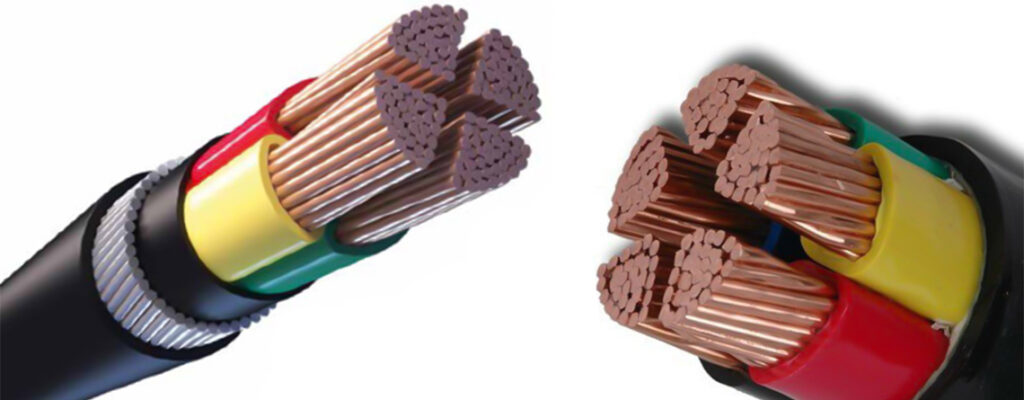
These are used in homes, shops, small offices, and small machinery.
Typically, they handle up to 1000 volts.
Where they’re used:
- Lighting
- Home appliances
- Air conditioners
- Small motors
They come in two types:
- Armoured cables– have a steel layer for protection (used underground or in rough environments)
- Unarmoured cables – used indoors in safe environments
b) Medium Voltage (M.V.) Power Cables
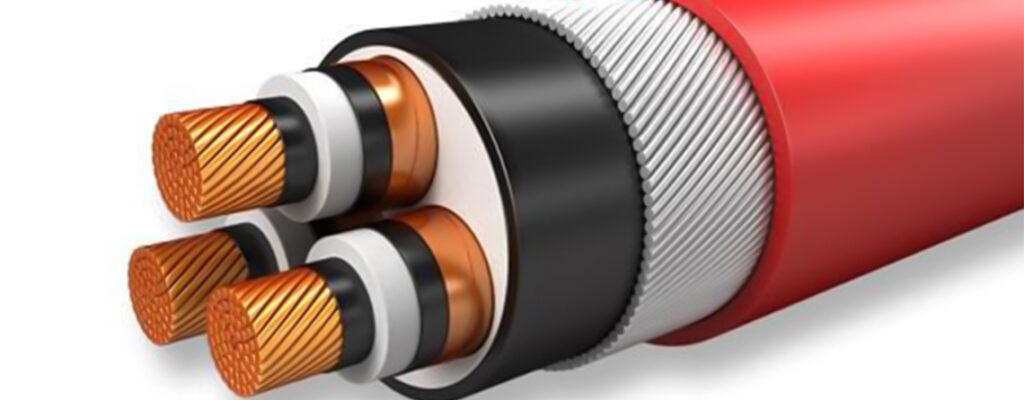
These cables carry more power up to 33kV.
Where they’re used:
- Factories
- Large buildings
- Distribution networks
- Industrial machinery
These cables have extra insulation and better safety features.
c) High Voltage (H.V.) Power Cables
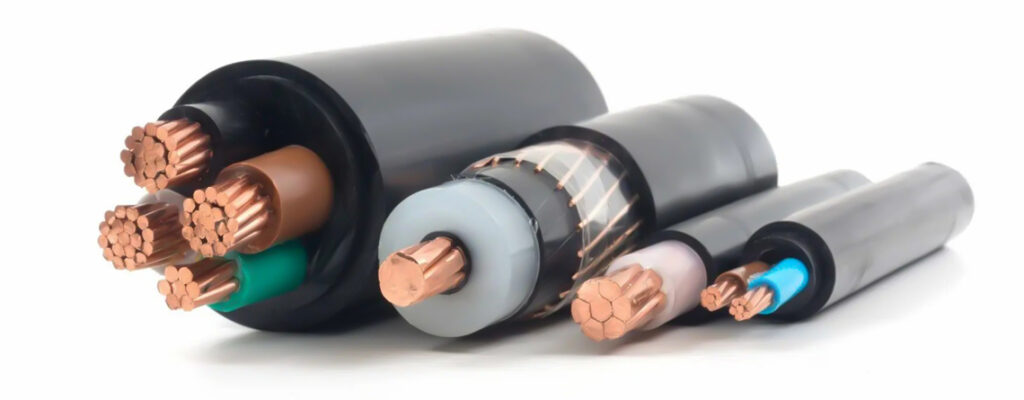
These are heavy-duty cables used by utility companies and large industries. They carry very high voltage for long distances.
Where they’re used:
- Power transmission
- Grid systems
- Power stations
d) Control Cables
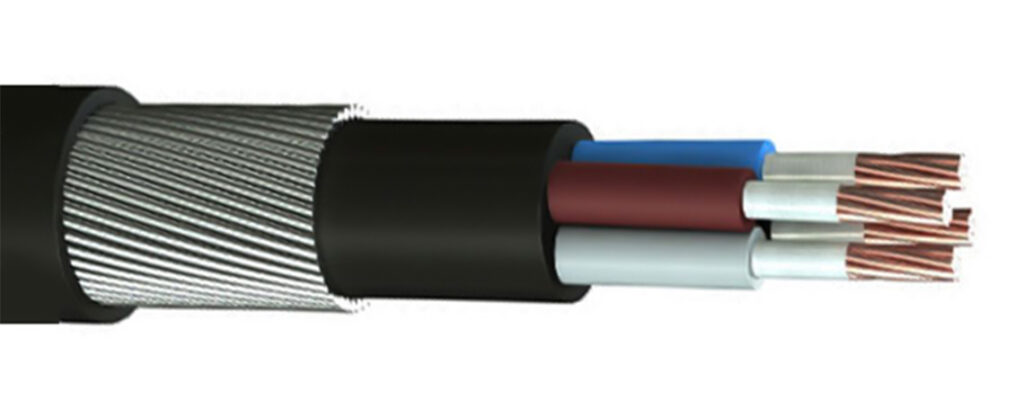
These do not carry heavy electrical loads. Instead, they carry control signals.
Where they’re used:
- Electrical panels
- Automation systems
- Machines that need commands and control signals
e) Flexible Cables
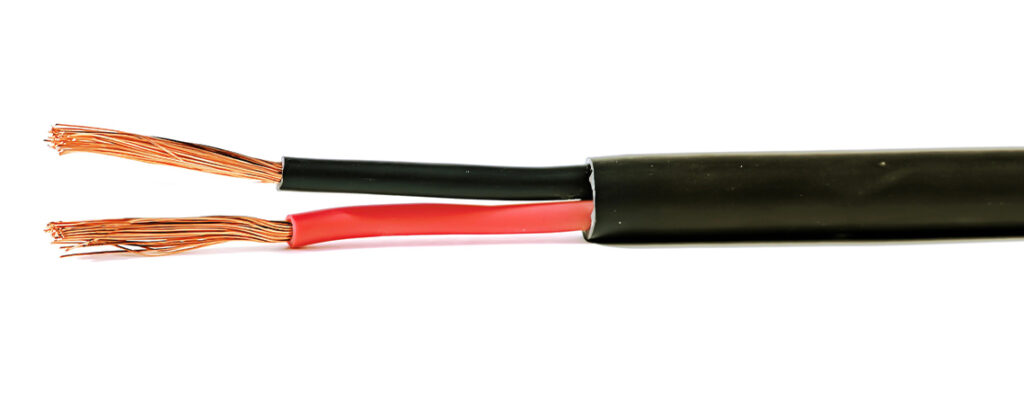
These are the soft and bendable cables you use every day.
Examples:
- Extension wires
- Home appliances
- Portable tools
They’re made to flex without damage.
f) Submersible Cables
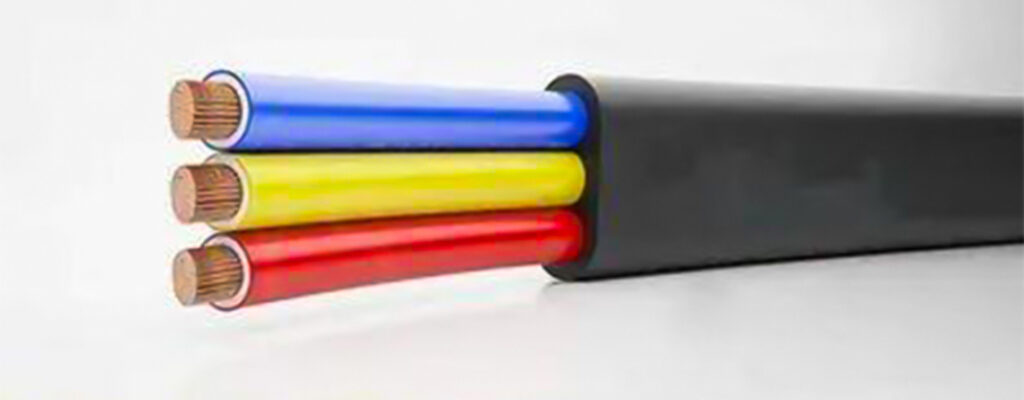
Designed to work underwater.
Where they’re used:
- Water pumps
- Tube wells
- Borehole pumps
They have waterproof insulation to prevent failure.
g) Solar Cables
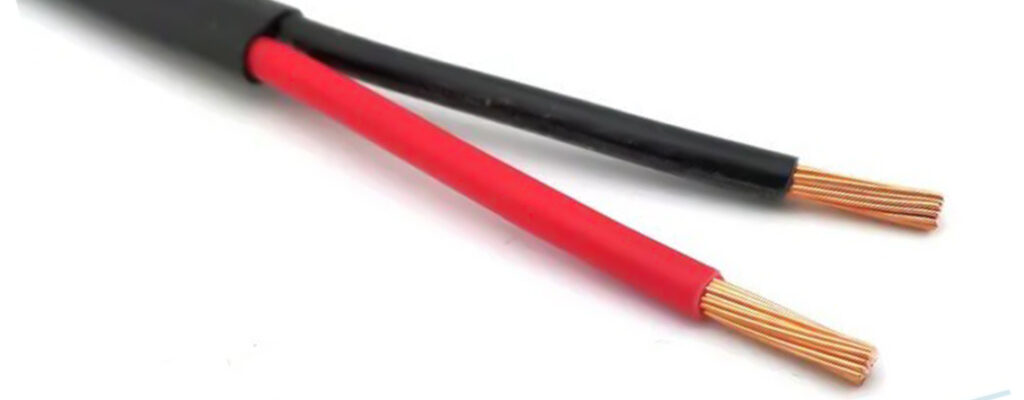
Also called PV cables.
These handle outdoor heat, UV rays, and long-term sun exposure.
Where they’re used:
- Solar panels
- Inverters
- Solar farms
They’re long-lasting and weather-resistant.
h) Aerial Bundle Cables (ABC)
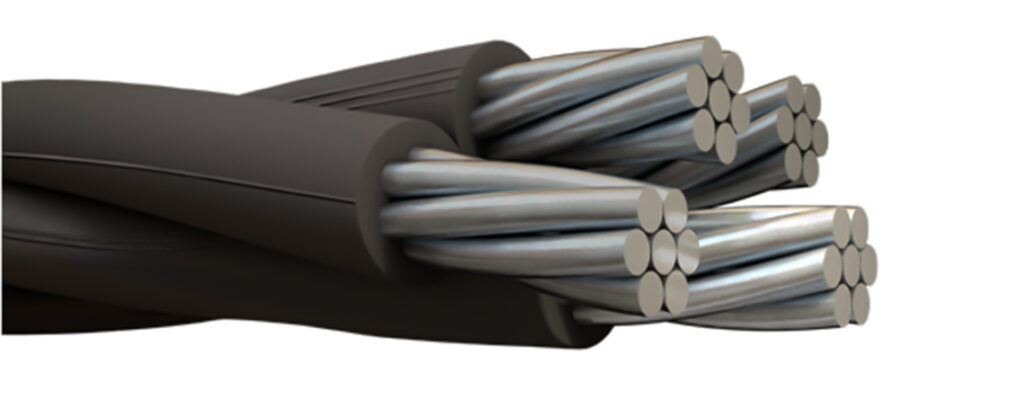
Used overhead on poles instead of underground.
Where they’re used:
- Street-to-house connections
- Rural and urban electricity distribution
They’re safe, efficient, and reduce power theft.
What Do Power Cable Sizes Really Mean?
Cable size is one of the most important things to understand.
It determines how much current a cable can handle safely.
Cable size is usually measured in square millimeters (mm²). This refers to the cross-sectional area of the conductor.
Cable Size Chart (mm²) and Their Typical Applications
| Cable Size (mm²) | Typical Usage / Applications |
| 1.5mm² | Lighting circuits, small loads |
| 2.5mm² | Sockets, outlets, general wiring |
| 4mm² – 6mm² | Air conditioners, geysers, ovens, medium-load appliances |
| 10mm² – 16mm² | Main supply lines in homes, small commercial load |
| 25mm² – 70mm² | Commercial & industrial loads, motors, panels |
| 95mm² – 400mm² | Large industries, transformers, power distribution lines |
Copper is a better conductor than aluminium, so copper wires and cables can be smaller in size for the same load.
Example:
16mm² copper cable ≈ 25mm² aluminium cable for the same current.
How to Choose the Right Cable Size
Using the wrong cable size is a sure path to trouble: overheating, voltage drop, fire hazards, and constant tripping.
Here’s what you should consider before choosing a cable:
- How much load (wattage) the cable will carry.
- How long does the cable need to run.
- The environment (indoor, outdoor, underground, hot areas).
- Safety guidelines and local electrical codes.
If you’re ever unsure, it’s always wiser to go one size higher or ask a qualified electrician.
How Do You Install Power Cables the Right Way?
Even if you’re working with products sourced from leading Pakistan wire industries or handling a site installation yourself, proper techniques make all the difference in safety and performance.
Indoor Installation:
Cables inside buildings should go through conduits, avoid sharp bends and stay away from heat sources. Proper clamps and supports will keep them neat and safe.
Outdoor Installation:
Cables outside need extra protection against rain, sunlight, and temperature changes. Look for waterproof sheaths and UV-resistant insulation.
Underground Installation:
For safety and aesthetics, cables are often buried. Use armoured cables, dig trenches at the proper depth, and protect them with sand or warning tapes.
Overhead Installation:
Overhead cables, like Aerial Bundle Cables, should maintain proper spacing, avoid touching trees or structures, and be installed by trained professionals.
What Safety Tips Should You Never Ignore?
Electricity is powerful but unforgiving. A few simple habits can save you from huge problems later.
- Never overload a cable
- Replace damaged cables immediately
- Avoid using cheap, uncertified electric wires
- Choose the correct type of cable for the environment
- Call an electrician for major installations
A good cable may cost more upfront, but it gives you peace of mind and long-term safety.
Where to Get the Best Electrical Power Cables

Now that you know about the different types of cables, their sizes, and how to install them, the next big question is: where can you get reliable, high-quality cables?
Choosing the right supplier is just as important as choosing the right cable. A good cable from a trusted brand ensures safety, durability, and peace of mind.
One name that stands out in the world of electrical power cables is Universal Cables. With over 40 years of experience in commercial connectivity, Universal Cables, one of the leading electric cable manufacturers in Pakistan, provides products designed for high performance and manufactured to the highest standards. Our solutions are built to last and ideal for a wide range of applications, from homes and offices to large commercial facilities and industrial projects.
We provide a broad range of products, including:
- T.Power Cables (armoured & un-armoured, PVC & XLPE, copper & aluminium)
- Flexible, Control, and General Wiring Cables
- T.Cables, Aerial Bundle Cables, Solar Cables, and more
- Customized Cables for special needs
Contact us now to get the best power cables in Pakistan for your project and enjoy safety, reliability, and long-lasting performance.